Apparently I picked a good time to revisit Point Break. AMC is developing a sequel series set 25 years after the original, built around a new crew connected to the Ex-Presidents. Whether anyone needed to paddle back into these waters is another question entirely.
For now, I went back to 1991, when Keanu Reeves was still two years away from Speed, Patrick Swayze was fresh off Ghost, and Johnny Utah was about to have one of the worst first assignments in FBI history.
And yet, it’s still a hell of a lot of fun.

I can’t remember if I saw Point Break in the theater when it originally came out. Probably. We went to the movies for damn near everything back then. I do remember that it made me want to learn how to surf.
That never happened, and it’s now permanently off my bucket list. Probably for the best considering Johnny nearly drowns the first time he tries it.
The movie wastes very little time establishing Johnny Utah and Bodhi as two men living completely different lives. Bodhi (Patrick Swayze) is out riding waves while Utah (Keanu Reeves) is showing off his shooting skills at an FBI training facility.
One is carefree. One is deadly serious. Both are very good at what they do.
At least that’s what Point Break wants us to believe about Johnny Utah.
Welcome to California, Johnny Utah
Utah arrives in Los Angeles fresh out of Quantico and gets partnered with Pappas (Gary Busey), a veteran agent who has been working bank robberies for 22 years.
Pappas isn’t particularly impressed by the new kid’s shiny FBI education, and that’s understandable. School is one thing. Real life is another.
But sometimes fresh eyes see things the person staring at the same shit for years doesn’t.
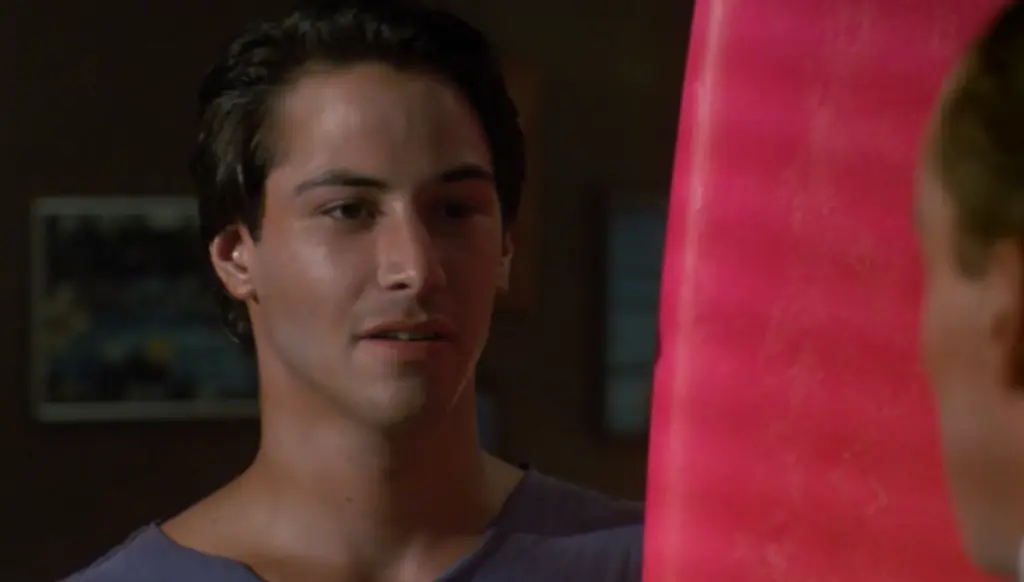
Pappas has been chasing a group of bank robbers known as the Ex-Presidents, who storm banks wearing masks of Reagan, Nixon, Carter and Johnson. They’ve hit dozens of banks without getting caught, and Pappas has reached the point where he calls them ghosts.
Utah isn’t ready to give up so easily.
That’s what makes him interesting at first. He’s smart, stubborn and has something to prove. Pappas has experience, but Utah hasn’t spent 22 years deciding what’s impossible yet.
Once Pappas reveals his theory that the Ex-Presidents are surfers, Utah buys a board and throws himself straight into that world despite one small problem: He can’t f*cking surf.

And since we know one of the main stars of the movie isn’t going to drown in the first minutes of the film, we meet Tyler (Lori Petty), who saves him from drowning. She isn’t particularly thrilled that some idiot who doesn’t know what he’s doing has wandered into her territory.
Naturally, Johnny decides she’ll make the perfect way into the surfing community.
Naturally, he also starts falling for her.
And that’s approximately where Special Agent Johnny Utah begins losing the plot.
Bodhi Doesn’t Just Teach Johnny to Surf
Johnny eventually meets Bodhi, the charismatic surfer played by Swayze, and this is where Point Break becomes much more interesting than cops chasing bank robbers.
Bodhi isn’t merely someone Utah needs to investigate. He represents an entirely different way of living.
Everything is about the rush. Surfing isn’t a hobby to Bodhi. It’s practically a religion. He wants to find the biggest waves, push himself as far as possible and feel completely alive even if doing it eventually kills him.

Johnny is supposed to be pretending to understand this guy. The problem is that he actually starts understanding him.
It happens gradually. Johnny plays football with Bodhi’s crew. He parties with them. He learns to surf. He goes riding enormous waves at night despite Tyler warning that he’s not ready.
And for a little while, Johnny forgets why the hell he’s there.
He’s having fun.
That’s important because the same recklessness that made Johnny useful to Pappas starts becoming his biggest weakness. He’s not standing outside Bodhi’s world observing it anymore. He’s becoming part of it.
Tyler sees it happening. Bodhi certainly sees it happening. Johnny Utah seems to be the last person to figure it out.
He’s Still Supposed to Be an FBI Agent
Eventually Johnny realizes that Bodhi and his friends really are the Ex-Presidents.
That’s where everything should become easy. Bad guys identified. Catch bad guys.
Except Johnny likes the bad guy.
During one of the movie’s best sequences, Johnny chases a masked Bodhi on foot after another bank robbery. It’s long, intense and actually moves. Nobody is driving across a bridge smoking a cigarette for the tenth time while I’m begging for something to happen.
Johnny finally gets Bodhi in his sights, but he can’t pull the trigger.

Instead, he fires into the air in frustration and lets him escape.
Pappas immediately knows something is wrong because Johnny Utah doesn’t miss – that was made very clear at the beginning of the film.
At that point, Pappas should probably have wrapped Johnny in bubble wrap, thrown him into the back of an FBI van and taken him off the f*cking case.
Because it gets worse. Much worse.
Apparently We’re Skydiving Now
By now Bodhi knows exactly who Johnny is, and Johnny knows exactly who Bodhi is. So naturally they go skydiving together.
This sequence is hilarious when you think about Johnny’s situation. He’s surrounded by dangerous bank robbers who know he’s an FBI agent. They’re screwing around with the parachutes so he doesn’t know which one he’s getting.
I’d be wondering whether the f*cking thing was going to open.
Johnny?
WOOOOOO! THIS IS AWESOME!
Sir. You are at work.
But I get what Point Break is doing. Johnny has found his people in the worst possible place. These are the men he’s supposed to arrest, but they also understand something in him that the FBI doesn’t.

Even undercover agents can become emotionally attached to the people they’re investigating. Joe Pistone became genuinely close to men in the Bonanno crime family while working undercover as Donnie Brasco. Human relationships don’t conveniently disappear because one person has a badge.
Johnny’s problem is that he completely loses control of the line. And Bodhi knows exactly how to use that against him.
He has Tyler kidnapped and forces Johnny into participating in another bank robbery. Johnny walks into the bank completely exposed, carrying an unloaded shotgun, while the surveillance cameras record the whole thing.
Everything goes to hell. People die. And the consequences keep piling up.
Johnny, This Is Your F*cking Fault
This is where I stop feeling particularly sorry for him.
Johnny’s relationship with Tyler compromised him. His relationship with Bodhi compromised him. His decision to let Bodhi escape compromised him.
Eventually Pappas dies. And Johnny played a role in creating the circumstances that got him killed.

That’s what makes Johnny more interesting than the standard heroic FBI agent. He’s not merely a good guy who gets manipulated by a brilliant criminal. He repeatedly makes emotional choices despite having plenty of opportunities to recognize what is happening.
Bodhi doesn’t completely corrupt Johnny. He gets Johnny to see the world differently.
That’s much more dangerous.

By the time Johnny literally jumps out of an airplane without a parachute to chase Bodhi, the straight-arrow kid who arrived from Quantico is long gone.
It’s ridiculous. It’s exciting. And it works because everything blends together so well. It actually reminds me a little of The Girlfriend, where we’re seeing two sides of the story. Not in the same way, of course, but it has that same kind of vibe. Johnny and Bodhi are supposed to be on opposite sides, yet the longer they’re together, the harder those sides are to separate.
I Still Hate That Ending
Eventually Johnny catches up with Bodhi at Bells Beach, where the massive storm Bodhi has spent years waiting for has finally arrived.
Johnny has been tracking him. He knows Bodhi wouldn’t miss the wave of a lifetime.
They fight. Johnny wins. Bodhi is handcuffed.
THE END. Except, of course, it isn’t.
Bodhi asks Johnny to let him surf the monster wave he’s been dreaming of his entire life before spending the rest of his life in a cage.
And Johnny f*cking lets him. Again. This guy does not learn.
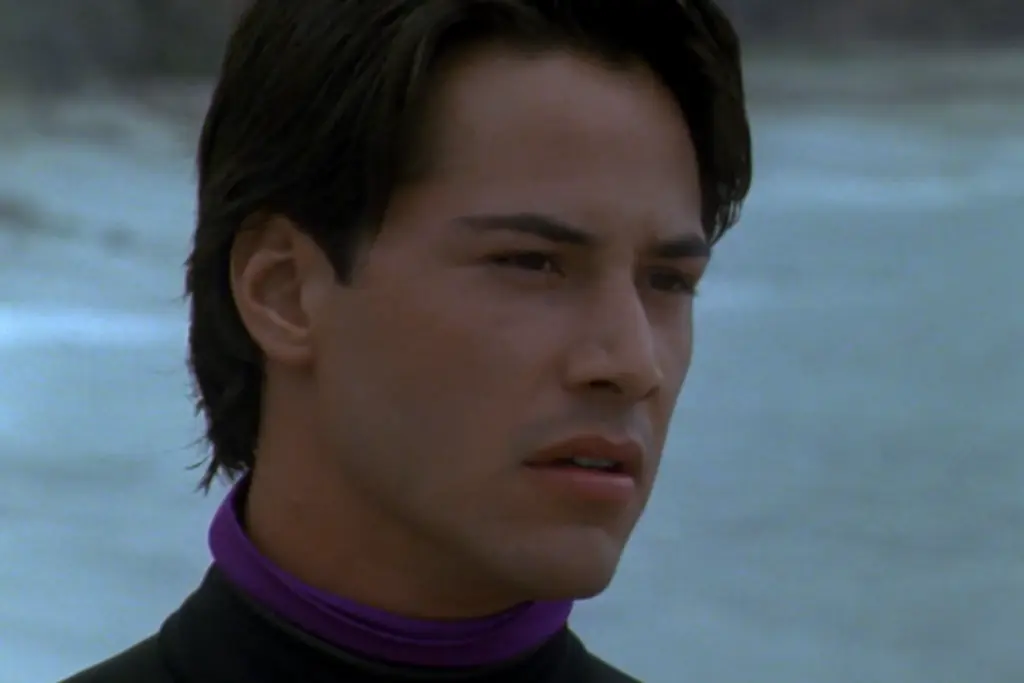
Johnny apparently believes the ocean will take care of the problem for him. Bodhi paddles out, gets swallowed by the enormous wave and presumably dies.
Then Johnny throws his FBI badge into the ocean as he walks away thinking his job is done.
I don’t like it.
I understand it, though. Johnny has finally accepted that the person who walked out of Quantico isn’t who he is anymore. His experience with Bodhi has destroyed the neat little division between good guys and bad guys he started with.
But understanding Bodhi doesn’t erase what Bodhi did.
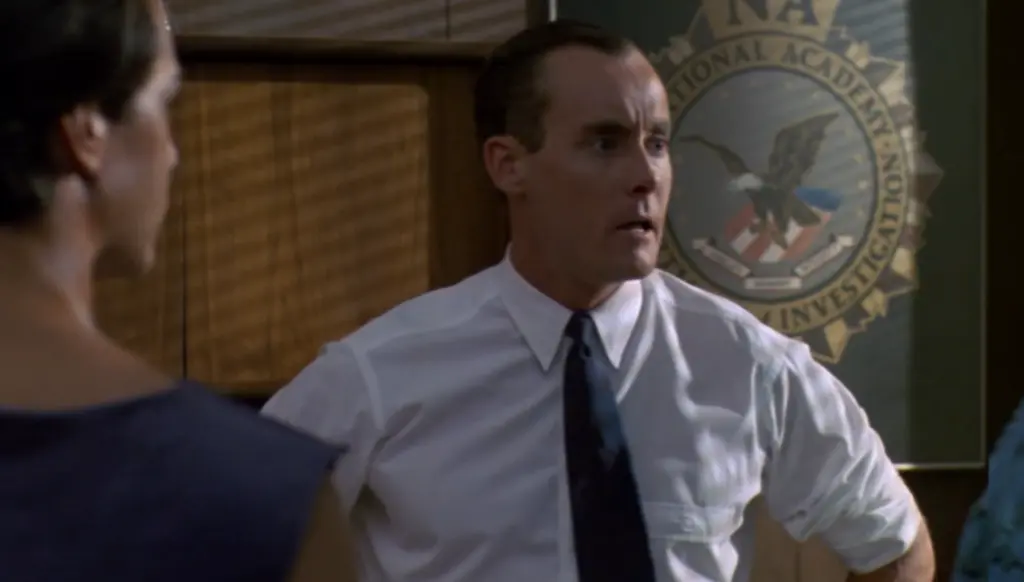
This is where I think about Columbo. Columbo could understand his murderers. Sometimes he even genuinely liked them. In “Any Old Port in a Storm,” he can share a bottle of wine with Donald Pleasence‘s Adrian Carsini after solving the murder.
But Columbo still arrests his ass.
That’s his job.
Johnny had Bodhi. People were dead. Pappas was dead. And instead of finally doing the job, he gave Bodhi exactly what he wanted.
Throwing the badge into the ocean afterward doesn’t change that.
🔥 Our Verdict: WATCHABLE
For a movie that runs a little over two hours, Point Break moves at a hell of a clip. There’s plenty of action, but it’s the quieter psychological game between Johnny and Bodhi that makes the movie more than a bunch of surfing, bank robberies and Keanu Reeves running after Patrick Swayze.
Bodhi doesn’t want to live inside anybody else’s box. Johnny begins the movie believing the FBI gave him the rules he needs to understand the world. By the end, he’s learned that people aren’t that simple.
Things aren’t always black and white – unlike my review system.
Johnny finds the gray area and gets completely f*cking lost in it.
I still don’t like the ending. Bodhi choosing a wave that will probably kill him isn’t the same as answering for the people he hurt, and Johnny letting him do it feels like one last failure to separate his feelings from his responsibility.
But maybe that’s the point. Johnny Utah started Point Break looking like the perfect FBI agent. By the end, even he knows he has no business carrying the badge.