
How the hell was I supposed to resist a movie about a murdered man who comes back as a housefly to get revenge on his killer?
I couldn’t. There it was, sitting in Netflix‘s recently added titles, a 2012 Indian movie I’d never heard of with a premise so completely ridiculous that I had no choice but to watch it.
And now, after watching Eega (2012), I can confidently say I’ve witnessed one of the most ludicrous, inventive, and ridiculously entertaining movies I’ve seen in a long time. And the best part? I couldn’t stop watching the damn thing.
Eega, which means fly in Telugu, is an Indian fantasy action-comedy directed by S. S. Rajamouli. It’s also my introduction to Indian cinema, although technically it’s Tollywood rather than Bollywood, since it’s a Telugu-language production.
I know practically nothing about Indian cinema except that some of these movies can run for hours. But at 145 minutes, my introduction flew by. Literally.
The Love Triangle That Launches a Thousand Fly Attacks
Before anyone starts swatting insects, Eega introduces Nani (Nani), an easygoing young man who’s spent two years pursuing Bindu (Samantha Ruth Prabhu), the pretty woman living across the street.
Bindu enjoys teasing him and playing hard to get, although it’s pretty obvious she returns his feelings.
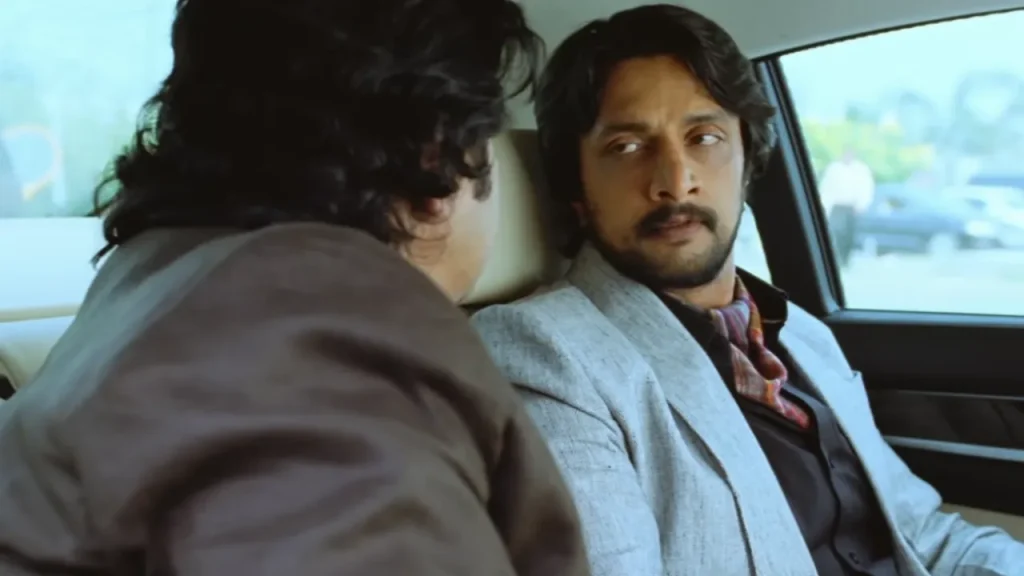
Unfortunately, a wealthy businessman named Sudeep (Sudeep, also known as Kichcha Sudeepa) develops an interest in Bindu after she approaches him for a charitable donation. And Sudeep isn’t the kind of man who accepts rejection.
He’s handsome, wealthy, arrogant, and has the swagger of an American action star, complete with a deep voice that occasionally reminded me of Sylvester Stallone.
He’s also a murderer who treats women like possessions.
The romantic setup is pure cheese, complete with colorful musical numbers, exaggerated flirting, and a song about hearts flowing with lava. I was laughing my ass off, but in a good way.

It’s an entirely different kind of cheese from what I’m accustomed to watching in Hallmark movies. Everything is bigger, brighter, louder, and more theatrical. Even when the setup takes its time, it’s entertaining enough that I didn’t particularly care how long it would be before somebody turned into a fly.
But eventually, Sudeep’s jealousy turns murderous, and Nani gets his wish for another chance at life. Just not quite the life he expected.
The Fly Is the Best Thing in the Movie
Nani’s reincarnation is where Eega goes from an entertaining romantic comedy to something completely bonkers.
He returns as a fly, complete with enormous red eyes and absolutely no idea how to operate his new body. And this is right about where I really started appreciating just how inventive this movie is.
Something as simple as learning to fly becomes an adventure. Ordinary household objects turn into obstacles. Water, people, and the everyday hazards of insect life suddenly become genuine threats.

For a while, it’s almost like watching an animated children’s movie, except this particular fly has been murdered and wants to kill someone.
The visual effects give Nani an expressive personality without making him talk. His movements, reactions, and occasional moments of insect-sized panic tell us everything we need to know.
There’s a surprisingly effective emotional connection, too. Nani wants Bindu to recognize him, but she’s looking at an ordinary fly. Why the hell would she give it a second thought?
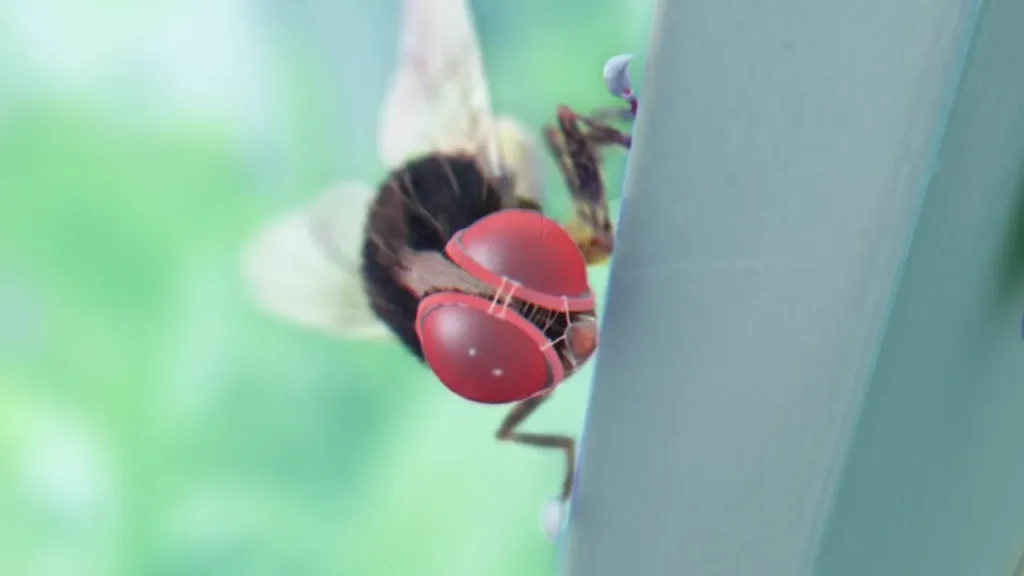
Even when he’s practically throwing himself at her to get her attention, he’s still just a tiny insect buzzing around her apartment.
That frustration is funny, but it’s also a little sad. And once Nani realizes exactly who killed him, the movie becomes an increasingly elaborate battle between a housefly and a very dangerous man.
Guess who starts winning?
Sudeep Versus a Fly Is Comedy Gold
Sudeep is the kind of villain who believes money, power, and intimidation can solve every problem. Unfortunately for him, none of those things means much when your enemy is small enough to disappear into a crack in the wall. And Nani quickly learns how to exploit that advantage.
Sudeep becomes increasingly frantic as this little bastard buzzes around his head, interferes with his plans, and generally makes his life miserable. It’s almost impossible not to laugh.
Sudeep is spectacularly over the top, especially as his paranoia grows. Watching this handsome, swaggering businessman come completely unglued over a fly is one of the movie’s greatest pleasures.

But here’s what’s particularly impressive: the comedy doesn’t depend on Nani cracking jokes or delivering clever one-liners. He’s a fly. He can’t talk.
Instead, the filmmakers rely on physical comedy, elaborate visual gags, and some remarkably inventive action sequences.
At times, it feels like Road Runner and Wile E. Coyote, except the Road Runner is a housefly and the coyote is a murderous businessman armed with bug spray.
It’s almost unbelievable how well it works. In fact, it works so well that entire stretches unfold with practically no dialogue, and I never once found myself wishing somebody would start talking.
Eega Has Technicolor Urgency
One of the first things I noticed was how bright the movie is. The colors practically jump off the screen. There’s an almost exaggerated vibrancy to everything, from the romantic scenes to the increasingly ridiculous confrontations between Nani and Sudeep.
But it’s not just the color that gives Eega its energy. It’s the music, the editing, the movement, and the way the filmmakers keep finding new things for this tiny character to do.
M. M. Keeravani’s music is a huge part of the experience. The romantic numbers are gloriously cheesy, while the action sequences use the score to make Nani’s movements feel like elaborate battles.

It’s got Technicolor Urgency, and not simply because everything looks bright and colorful. Even when the story slows down, it feels alive.
And just when you think you’ve figured out the movie’s particular brand of insanity, it shifts gears again.
What starts as a musical romance becomes a slapstick revenge comedy before drifting into supernatural territory involving Tantra (Chandra Sekhar), a practitioner of dark magic who gives Sudeep another way to fight his seemingly indestructible enemy.

Yes, the movie about a reincarnated housefly somehow finds room for an occult showdown. Why the hell not?
The later action sequences are surprisingly intense, and they demonstrate just how much mileage the filmmakers get out of an idea that sounds completely ludicrous on paper.
There’s real creativity involved in making a tiny insect the hero of a feature-length action movie.
Two and a Half Hours of Absolute Insanity
Could Eega have been shorter? Probably.
By American movie standards, there are stretches that could have been trimmed, especially during the romantic setup. The movie also occasionally leans so heavily into melodrama that you have to accept its peculiar sense of logic.
But I didn’t get bored. Not once.
That’s saying something when you’re spending more than two hours watching a CGI housefly torment a grown man. And as ridiculous as the premise is, the performances sell it.
Sudeep is terrific as the increasingly desperate villain, while Samantha Ruth Prabhu gives Bindu enough warmth and personality to make her more than a romantic prize.
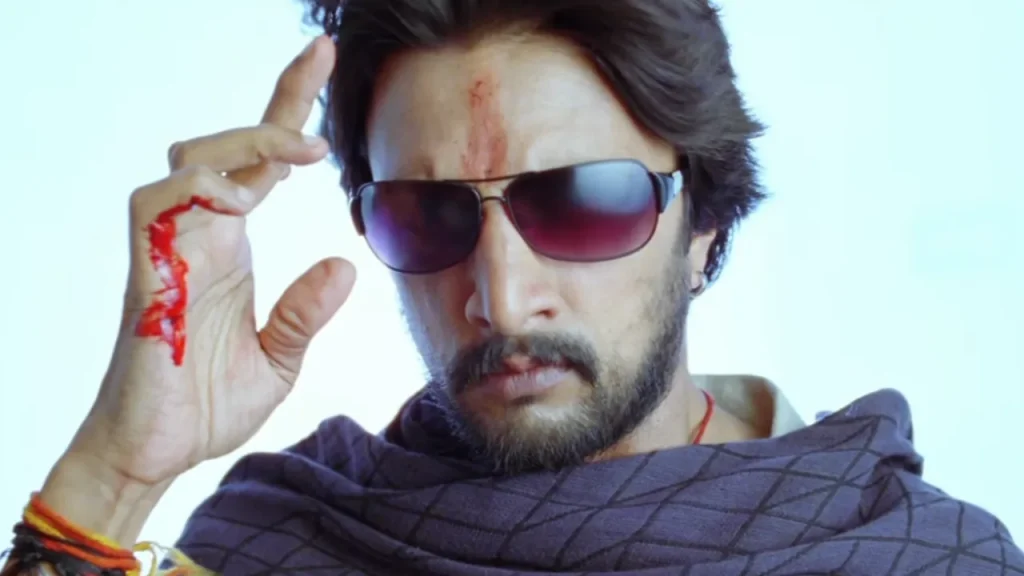
Nani, meanwhile, manages to become the movie’s most engaging character even after he stops appearing as a human being.
The climactic stretch is completely insane. There’s slow-motion villain swagger, a battle involving a gun and a fly, and the kind of exaggerated spectacle that should be absolutely laughable.
Actually, it IS laughable. But you’re laughing while you’re completely invested in what’s happening. That’s the difference.
And don’t switch off the movie the moment the ending arrives. The credits include additional playful material, including more of the movie’s musical absurdity.
It’s a fitting send-off for a film that never seems particularly interested in behaving itself.
Our Verdict: 🔥 WATCHABLE
I went into Eega expecting to laugh at a ridiculous premise. I ended up loving the movie.
It’s cheesy, colorful, wildly exaggerated, and occasionally so absurd that I couldn’t believe what I was watching. But it’s also clever, energetic, genuinely funny, and far more inventive than a movie about a revenge-seeking housefly has any right to be.
I don’t know whether this means I’m officially an Indian cinema fan after watching exactly one movie. But if this is what my first trip into Telugu cinema looks like, I’m certainly interested in seeing what else is out there.
And the next time somebody tells me a movie sounds too ridiculous to be worth watching, I’m going to remind them that I just spent 145 minutes cheering for a fucking fly.
And I loved every minute of it.