I watched Brian De Palma’s Carrie a few days before Mike Flanagan’s new adaptation premiered on Prime Video. The 1976 movie tells its story in roughly 90 minutes. Flanagan has eight episodes to work with, which could either give Stephen King’s story some much-needed breathing room or turn it into eight hours of material that should’ve been left on the cutting-room floor.
I like most of Flanagan’s work, but the man can drag things out when he wants to. So I wasn’t entirely convinced Carrie needed eight episodes.
And while I devoured Stephen King books when I was younger, thanks to my mother, who was a huge fan, I honestly can’t remember whether I read Carrie. I’m not going to pretend I know every difference between the book and the adaptations. My reference point is De Palma’s movie, and even that isn’t going to determine whether this series works.
They’re two different productions telling a familiar story in very different ways.
Oh, and I was pleasantly surprised to discover Siena Agudong, who recently played Nora in Tubi’s Buzzkill, is Sue Snell. I loved her in that movie, so that was already one point in the show’s favor.
Carrie White, step right up for your Trial by Stream.
The Story We Know, But Not Quite the Way We Know It
Flanagan makes an interesting decision by showing us the destruction first. The prom has ended in disaster, the school is burning, and the devastation has spread through Chamberlain. People are calling 911, and the whole thing unfolds through a combination of emergency calls, documentary-style interviews, and flashbacks.
Sue Snell is among those looking back on what happened, along with other people who knew Carrie. And everybody seems to have a different opinion about her.
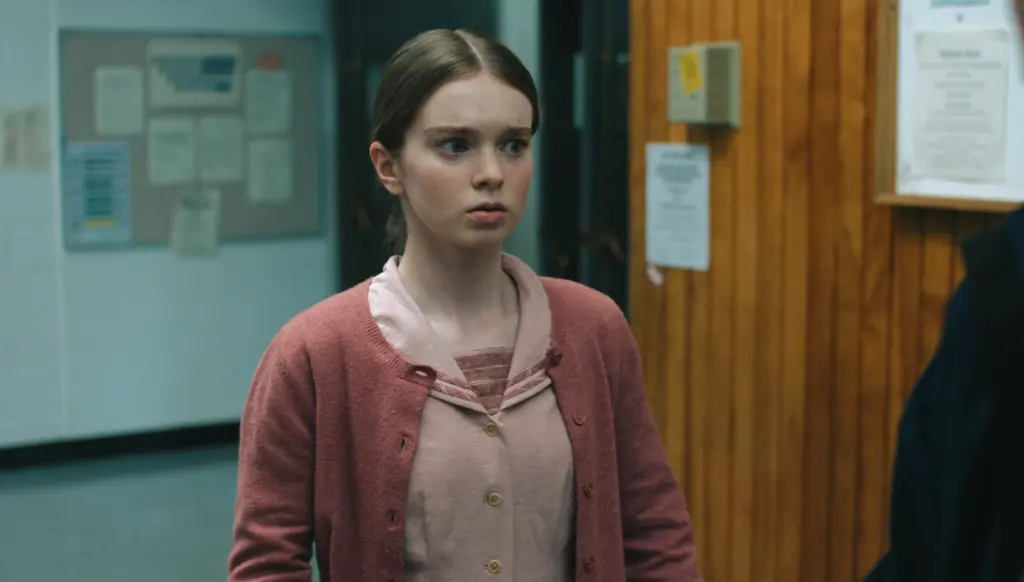
I like this approach. Rather than simply following Carrie toward an ending most viewers already know, Flanagan is asking us to consider how everybody involved contributed to what happened.
The documentary format also allows him to explore the years before Carrie entered public school, including the family’s strange existence in Chamberlain.
After Ralph White dies in a construction-site accident, the authorities discover that his wife Margaret (Samantha Sloyan) and daughter Carrie (Summer H. Howell) have been living an extraordinarily sheltered life. The police find them hiding in a closet, and suddenly their entire way of life comes under scrutiny.

Margaret hasn’t worked outside the home in 15 years. Ralph left no life insurance. Carrie has been homeschooled and knows practically nothing about the world beyond her parents’ beliefs.
Now Margaret has to find employment, and Carrie has to attend public school.
That’s an enormous adjustment for both of them, and it’s something the movie never had the time to explore in this much detail.
And frankly, I like getting the bigger picture.
Carrie Isn’t the Only Girl Whose World Is Falling Apart
One of the more interesting things about “First Period” is how Flanagan develops Chris Hargensen (Alison Thornton) alongside Carrie.
Carrie enters high school excited about practically everything. She’s fascinated by her classes, loves reading, and genuinely wants to make friends. She’s also completely unaware of the social hierarchy she’s walking into.
Chris, meanwhile, is already dealing with her own problems.
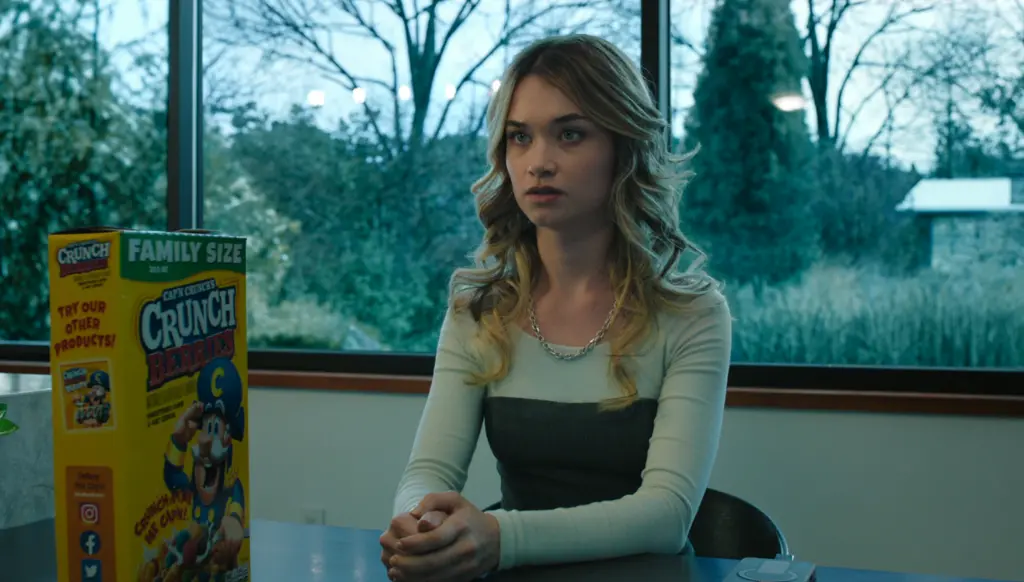
Her mother has left her father for another man, her family situation has changed, and her plans to attend college with Sue have just taken a hit because her father, John, says he can’t afford it.
And he’s not particularly pleasant about breaking the news.
Chris lives in a beautiful house and has spent years maintaining a certain image, but that image is beginning to fall apart. She doesn’t want anybody knowing what’s happening at home, and she certainly doesn’t want to be pitied.
Carrie has none of Chris’s social advantages, yet she’s intelligent, curious, creative, and surprisingly enthusiastic about her new circumstances.
And Sue is being nice to her.
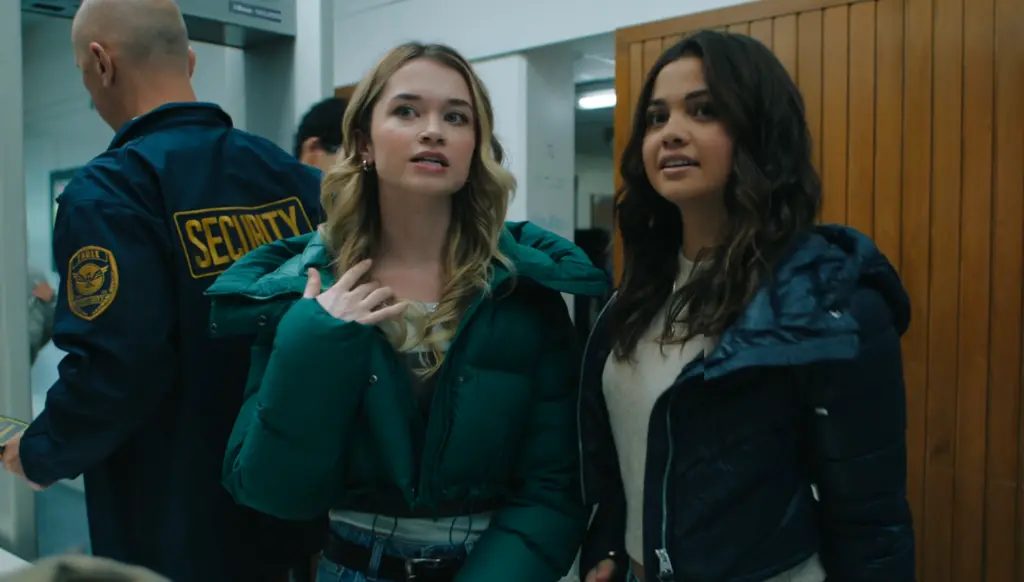
You can practically see Chris becoming more irritated every time Carrie does something that draws Sue’s attention.
The two girls are experiencing completely different upheavals, but there’s a parallel here. Both are losing the worlds they knew, both have parents who aren’t particularly good at helping them adjust, and both are frightened of what comes next.
The difference is how they respond. Carrie wants to fit in. Chris wants somebody to blame. And Carrie is an awfully convenient target.
Where the Hell Are the Responsible Adults?
Here’s where I started getting irritated.
Everybody knows Carrie has been homeschooled in an extremely isolated environment. A social worker has already assessed the family, and the school knows she’s entering an unfamiliar world.
So why the hell doesn’t anybody prepare her?
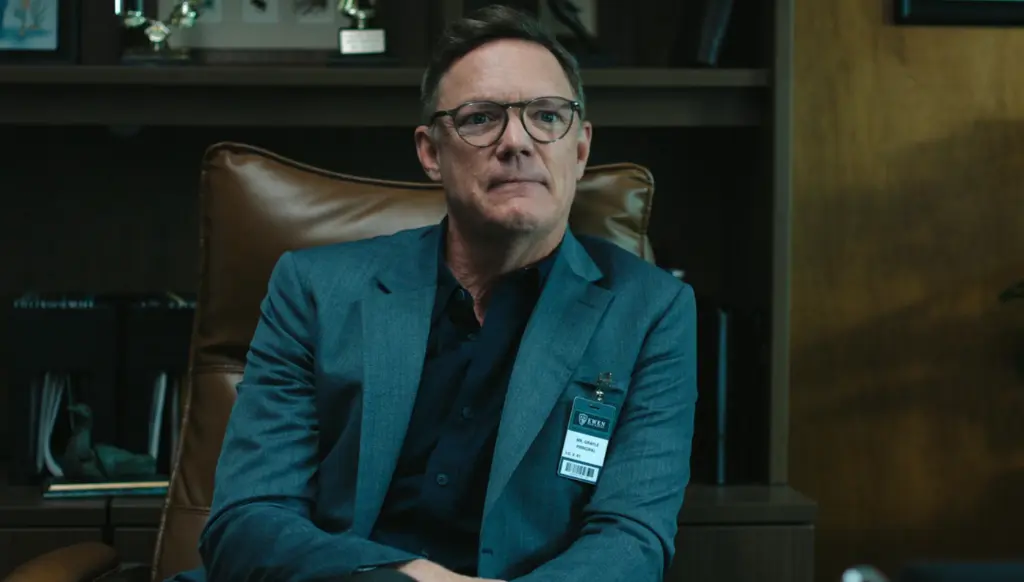
Carrie doesn’t know what homeroom is. She doesn’t understand the school’s routines. She’s never watched the news, and she certainly doesn’t know what to expect from a realistic lockdown drill.
Yet the school puts her through one without explaining what’s going to happen.
Armed participants enter the classroom, Carrie becomes terrified, and things start flying around the room as her telekinetic abilities react to her fear.
The drill has to be stopped.
Meanwhile, Chris is recording Carrie’s distress on her phone.
And I’m sitting there wondering why nobody bothered to tell this girl what a lockdown drill was before throwing her into one.
I didn’t grow up with lockdown drills. We had tornado drills. But I also remember transferring to a new high school during my sophomore year and being told how things worked.
Carrie isn’t simply transferring schools. She’s entering public education for the first time in her life.
Wouldn’t somebody have a conversation with her beforehand?
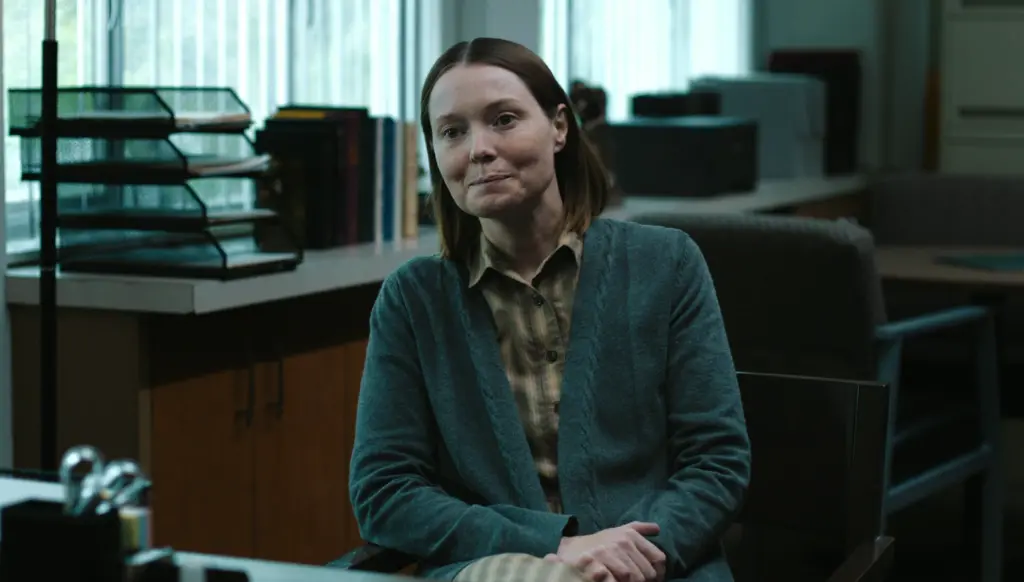
When Margaret confronts Principal Grayle (Matthew Lillard) about what happened, he essentially puts the responsibility back on her.
And yes, parents have responsibilities. But the school and social worker knew Carrie’s circumstances. They were involved in bringing her into this environment.
What exactly was the point of that intervention if nobody intended to help her make the transition?
Margaret has every reason to be furious about the drill. Some of the things she describes about realistic school-shooting exercises are disturbing, and I don’t think the principal does a particularly good job of addressing her concerns.
He tells her that most students find the drills routine.
But that raises another question: if a drill becomes so realistic and so routine that students can’t distinguish it from an actual emergency, how effective is it?
I’m not convinced the episode wants us to think very hard about that.
Margaret White Is More Complicated Than a Religious Lunatic
Samantha Sloyan’s Margaret is another reason this adaptation is working for me so far.
She’s controlling, deeply religious, and convinced that the outside world is a dangerous place. But she’s also a woman whose husband has just died, whose financial security has disappeared, and whose daughter is being pushed into an environment Margaret believes will harm her.
That doesn’t excuse the way she’s raised Carrie. It does give us a better understanding of her behavior.
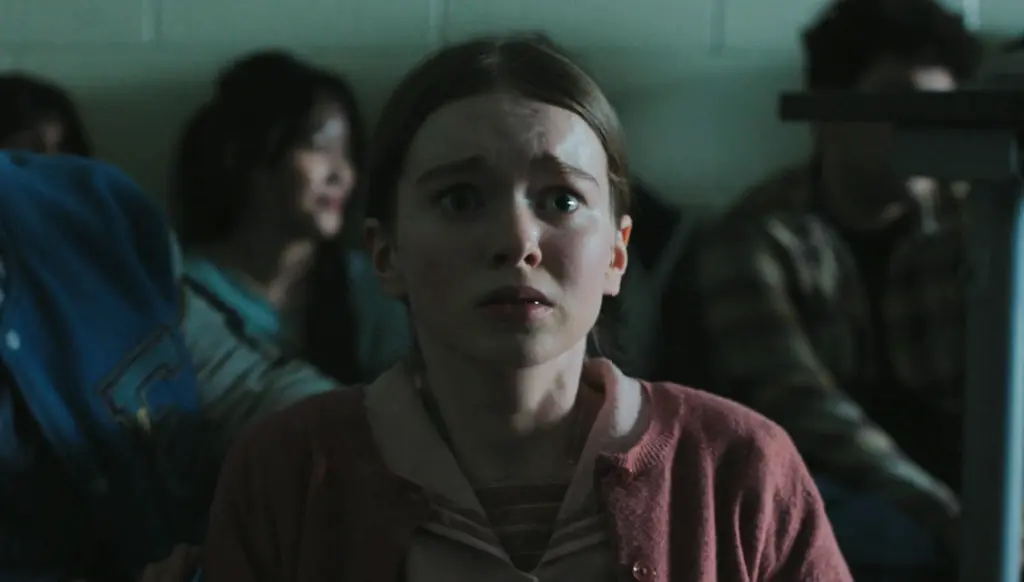
Margaret isn’t entirely unwilling to compromise, either. Carrie starts making different clothes for herself, including pants, and Margaret doesn’t immediately lose her mind over it.
She’s trying to adjust, too, even if she’s doing it badly.
Unfortunately, Flanagan keeps loading Margaret’s dialogue with political talking points about guns, abortion, and the supposed agenda of the outside world. And I don’t particularly like it.
Margaret’s religious extremism and controlling behavior are already established. We don’t need to turn every disagreement she has with the school into another political argument.
There’s a difference between examining how somebody’s beliefs influence their behavior and making those beliefs a convenient shorthand for everything wrong with them.
The story is interesting enough without that.
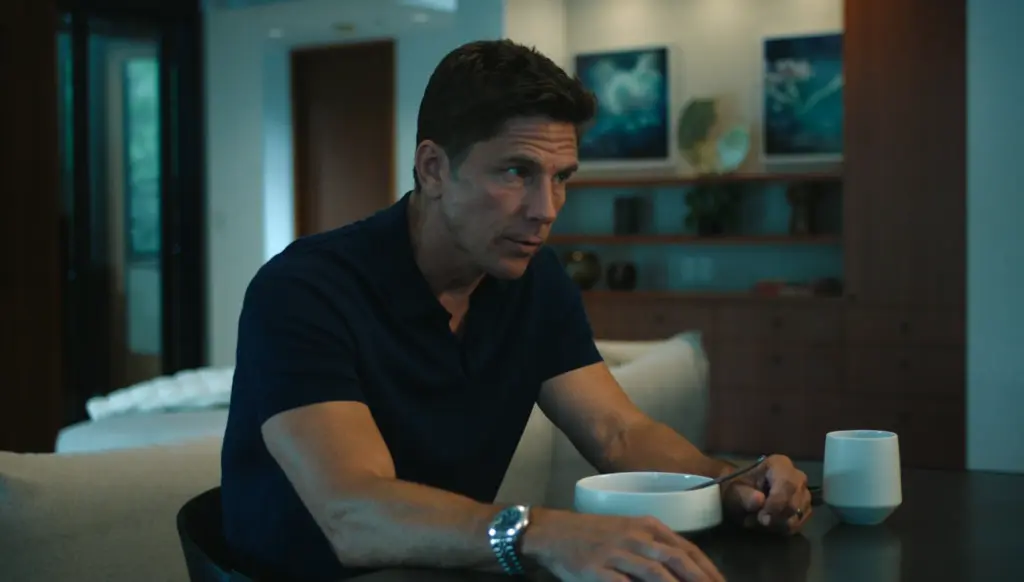
In fact, Margaret’s concerns about Carrie’s treatment at school are among the few things she’s arguably right about. I don’t need to agree with Margaret’s worldview to recognize that.
And when you compare her with Chris’s father, John Hargensen, I’m not convinced he’s doing a particularly better job of parenting. His daughter is struggling with a family breakup and the possibility of losing her college plans, and he’s so wrapped up in his own frustration that he barely seems to recognize what she’s experiencing.
Two very different households. Two girls in trouble. And adults who aren’t doing nearly enough.
First Period, and the Beginning of Something Worse
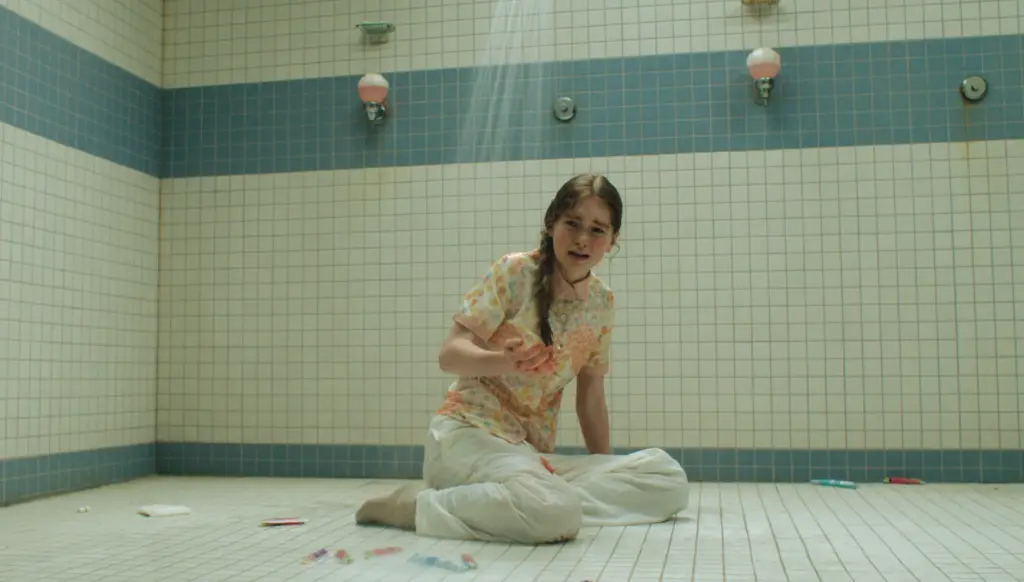
The episode eventually arrives at the scene everybody remembers: Carrie getting her first period.
Except Flanagan has already established how frightened and confused Carrie can become when she’s confronted with something she doesn’t understand.
We saw it during the lockdown drill. Now it happens again in the locker room.
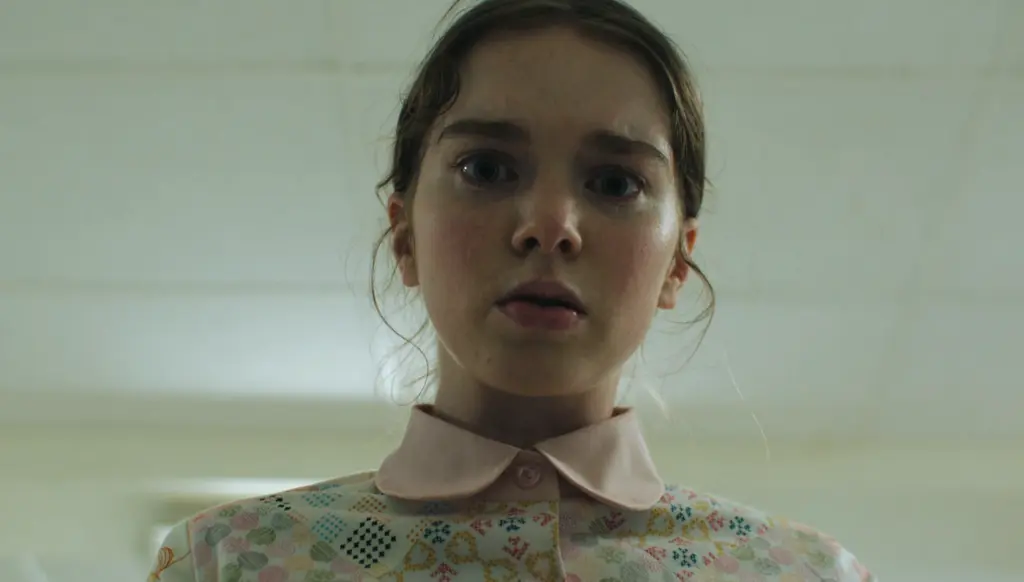
Carrie is bleeding, has no idea what’s happening to her, and is surrounded by girls who find her terror hilarious.
Chris and the others begin filming her, throwing tampons and sanitary pads, and chanting at her while Sue stands there in shock.
The cruelty is familiar, but the addition of cell phones makes it particularly ugly. Carrie’s humiliation isn’t confined to the girls who witnessed it. Now there’s the possibility of turning it into entertainment for everybody else.
And once again, Carrie is terrified because nobody prepared her for something she should’ve understood long before this moment. And as expected, her powers begin reacting.

There are other supernatural elements, too, including disturbing visions involving her dead father and a mysterious girl who seems connected to Carrie’s abilities.
That dream sequence with Ralph reminded me a little of The Haunting of Hill House, particularly the Bent-Neck Lady.
I’m not sure what to make of the girl connected to the apparent psychic institute yet. It’s an interesting addition, but we haven’t seen enough to know whether it’ll strengthen the story or send it wandering off somewhere unnecessary.
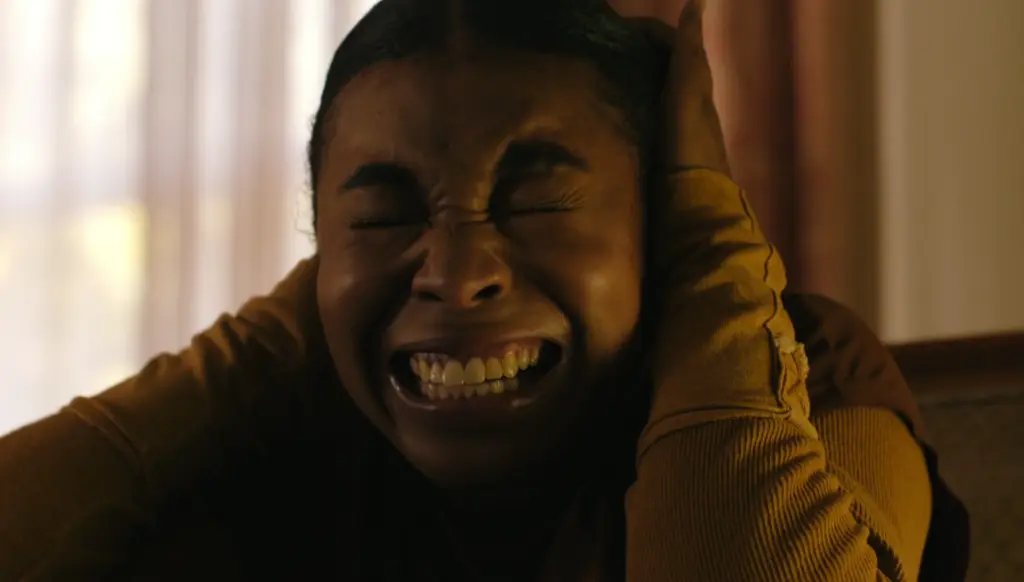
The documentary interviews raise questions of their own, especially when Sue suggests the people investigating the disaster aren’t asking the right questions.
Apparently, there’s more to this catastrophe than Carrie White. And that’s a pretty effective reason to keep watching.
🔥 Our Verdict: WATCHABLE
Carrie Season 1 Episode 1 succeeds because it doesn’t simply stretch the 1976 movie into a longer production. Flanagan is giving us the circumstances surrounding the tragedy rather than rushing toward the tragedy itself.
The parallel stories involving Carrie and Chris are particularly effective. Both girls are struggling with circumstances beyond their control, and we’re beginning to understand how their frustrations and insecurities could eventually collide.

Summer H. Howell makes Carrie genuinely likable, and Siena Agudong is already doing a incredible job as Sue. Samantha Sloyan also gives Margaret more dimensions than I expected.
I still have problems with how the school and social worker handle Carrie’s situation, and the political messaging attached to Margaret feels unnecessarily heavy-handed. I’m also reserving judgment on the additional psychic storyline.
But the documentary approach works, the expanded character development gives the story room to breathe, and the first episode has already justified why this version of Carrie might need eight hours rather than 90 minutes.
The movie showed us what happened. This series is beginning to show us why.
On to Episode 2.