There was a strange stretch of time when live-action Star Trek was over, the Enterprise had gone dark, and nobody knew that Kirk, Spock and the rest of the crew would eventually spend decades refusing to leave our screens.
So Leonard Nimoy became a psychic race-car driver. DeForest Kelley got mixed up with giant killer rabbits. And William Shatner fought thousands of live tarantulas in Arizona.
Honestly, this may be my favorite era of Star Trek history.
NBC canceled the original series in 1969 after three seasons. Syndication was busy turning the show into something much bigger than it had been during its original run, conventions were proving the fans weren’t going anywhere, and most of the cast would return to voice their characters for Star Trek: The Animated Series in 1973.
But live-action Star Trek was dead.
Nobody knew Star Trek: The Motion Picture would eventually put everybody back aboard the Enterprise in 1979, much less that movies, spinoffs and an apparently immortal franchise were waiting around the corner.
In the meantime, the actors had to work.
And three members of the Enterprise crew wandered into some wonderfully weird corners of 1970s genre entertainment.
Bones Had a Giant Rabbit Problem
DeForest Kelley got there first.
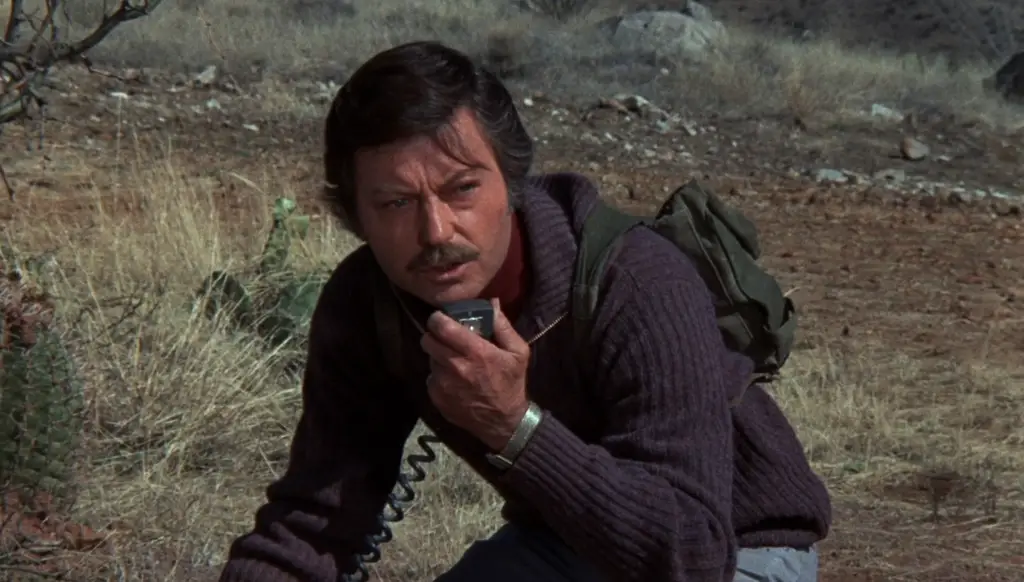
In 1972, Dr. McCoy traded the Enterprise for the Arizona desert and found himself dealing with a biological catastrophe that made tribbles look downright manageable.
Night of the Lepus is one of those movies that sounds like somebody lost a bet.
Giant killer rabbits terrorize Arizona. That’s it. That’s the movie.
Kelley plays college president Dr. Elgin Clark, who gets involved when rancher Cole Hillman’s property is overrun with rabbits. The rabbit population has exploded after their natural predators were killed off, but Hillman doesn’t want to solve one ecological disaster by creating another with poison.
So in comes some help from researchers Roy and Gerry Bennett, played by Stuart Whitman and Janet Leigh.
Their proposed solution involves interfering with the rabbits’ reproductive cycle through hormones and biological experimentation.
This goes extremely well.
An experimentally treated rabbit escapes, and before long Arizona has a considerably larger problem: enormous carnivorous rabbits capable of killing livestock and people.
If you haven’t seen Night of the Lepus, I cannot adequately prepare you for the sight of ordinary rabbits filmed on miniature sets and in slow motion while the movie desperately tries to convince you that you’re looking at unstoppable monsters.
They’re bunnies. Big bunnies, theoretically. But bunnies.
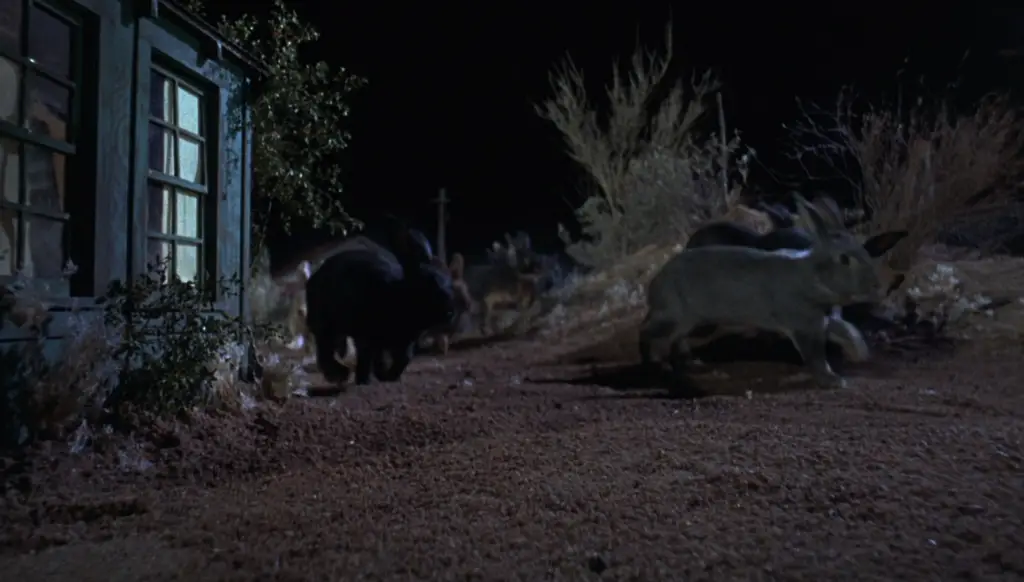
And the movie commits to this premise with a straight face. That’s what makes the damn thing so entertaining.
Kelley isn’t playing McCoy with a different name, either, although there’s something wonderfully appropriate about Bones landing in another scientific mess. Elgin Clark is the college president who brings the researchers into the problem, and once everyone realizes what their attempts at ecological control have helped unleash, he’s right there trying to stop it.
There’s also something underneath all the ridiculousness that makes Night of the Lepus a perfect artifact of its era.
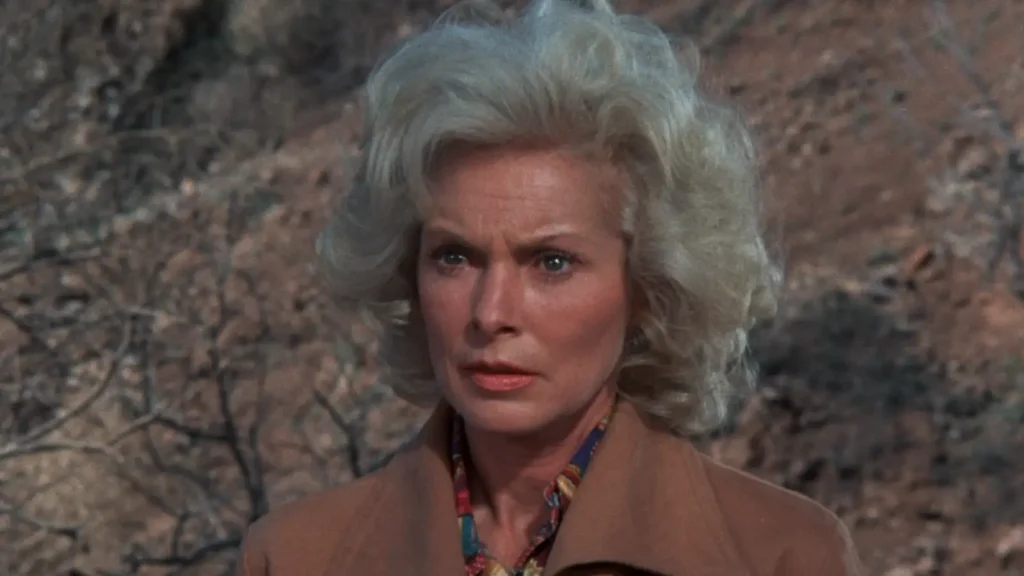
The real monster isn’t simply RABBITS GONE WILD. The disaster starts because humans disrupted the natural balance by eliminating predators, then attempt to fix that mistake through more intervention, which creates an even bigger problem.
Nature doesn’t need our help nearly as often as we think it does.
And Night of the Lepus wasn’t going to be the last time a former Enterprise officer wandered into Arizona and learned that lesson.
Five years later, William Shatner would arrive.
This time nature brought spiders.
Leonard Nimoy Is Not Spock. He’s a Psychic Race-Car Driver.
Between Kelley’s giant rabbits and Shatner’s tarantula invasion came Leonard Nimoy in Baffled!
If you’re trying to prove you can play someone other than an emotionally restrained Vulcan, becoming a swaggering race-car driver who suddenly develops psychic powers is certainly one way to go about it.
Nimoy plays Tom Kovack, a successful American racing driver who experiences a terrifying vision while flying around a track at roughly 140 mph.
Naturally, he crashes.
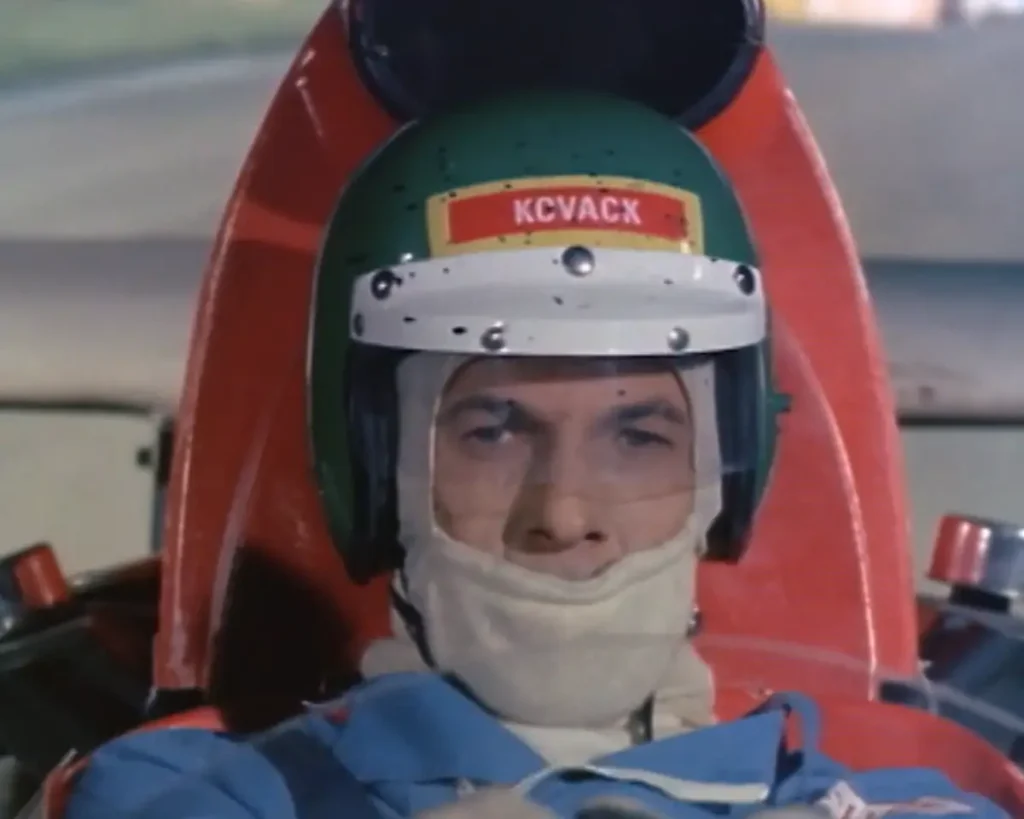
Kovack survives, but he’s left trying to understand what the hell happened to him. After he talks about the experience during a television interview, Michele Brent, played by Susan Hampshire, enters the picture.
She’s an expert in extrasensory perception and takes Kovack’s vision much more seriously than Kovack does.
Eventually the pair wind up at an English manor house that Kovack has somehow already seen in his mind, where his psychic flashes lead them into a supernatural mystery involving a woman in danger, a child, murder and forces that aren’t particularly interested in obeying the laws of logic.
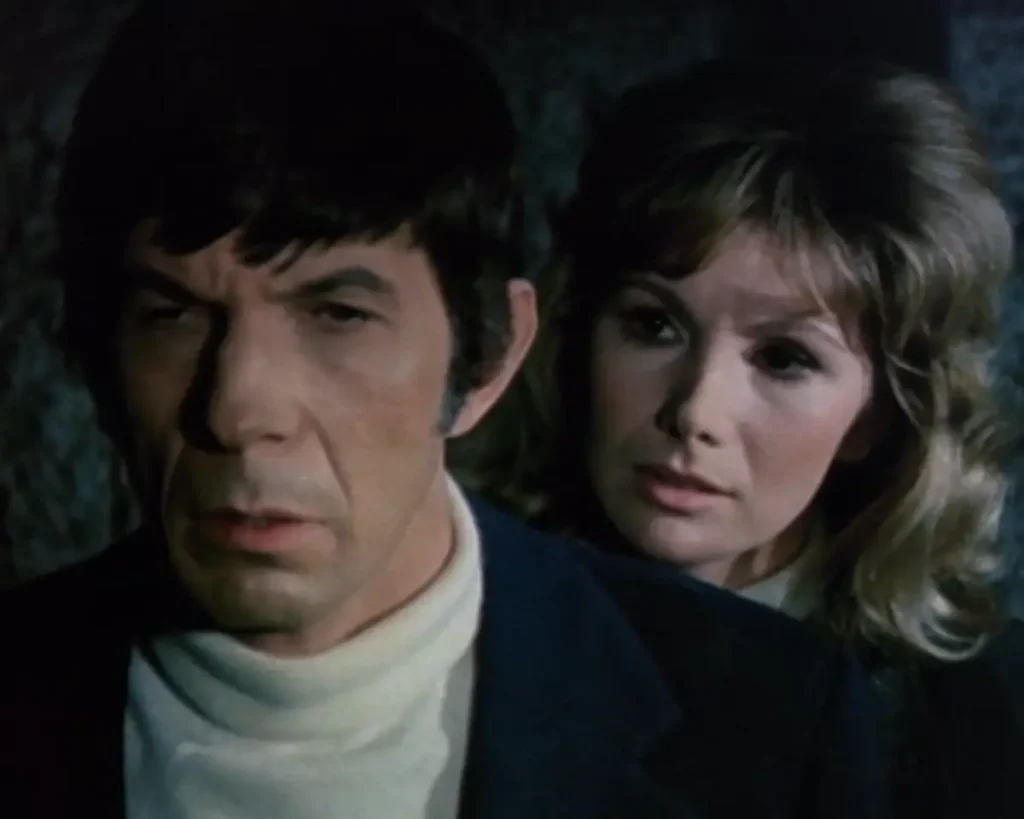
Vera Miles and Rachel Roberts are along for the ride.
And somewhere in all this insanity was supposed to be a television series.
Baffled! wasn’t originally intended as a one-off curiosity. It was produced as a would-be pilot, with Kovack and Michele positioned to continue investigating occult and paranormal mysteries if a network wanted more.
NBC didn’t.
Instead, Baffled! aired as a television movie in the United States in January 1973, while a version roughly ten minutes longer was released in Britain.
Too bad, because there is an alternate universe where Leonard Nimoy spent the 1970s driving around Europe solving supernatural mysteries, and I would very much like to see it.
What makes Kovack particularly fun in the context of Nimoy’s post-Star Trek career is how little interest the character has in reminding anyone of Spock.
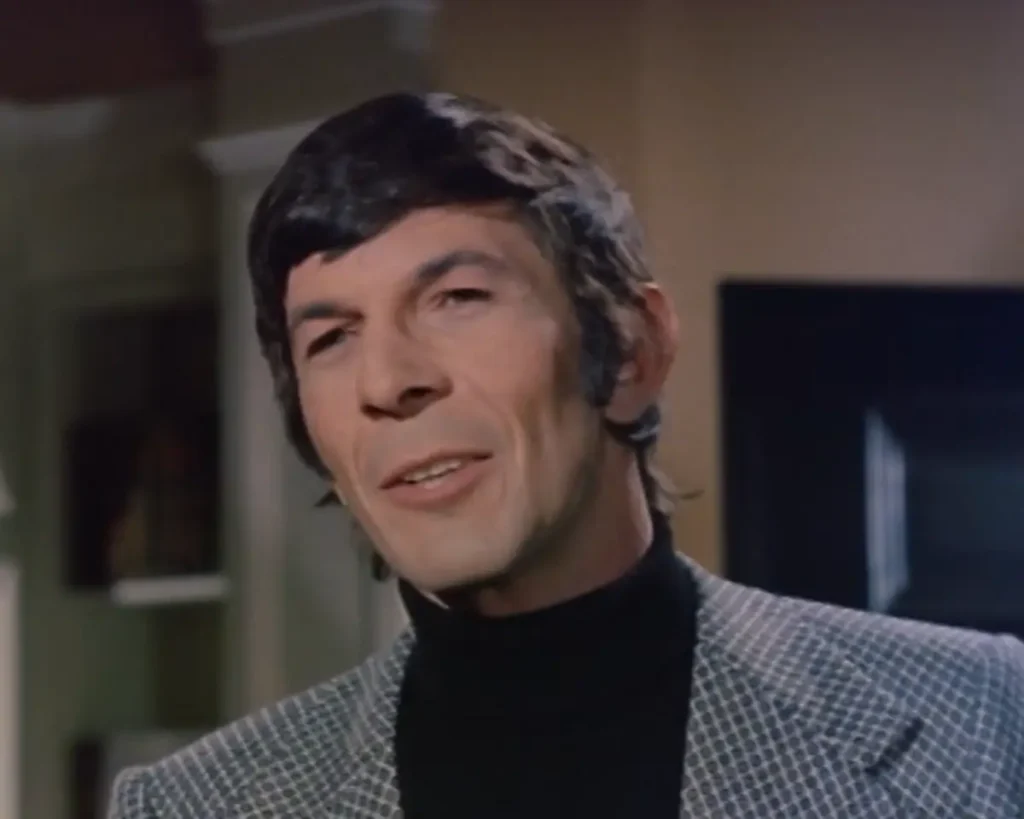
Kovack is cocky. Emotional. Skeptical. Flirtatious. His accent changes from New York style back to Nimoy style. He doesn’t understand what’s happening to him and isn’t particularly thrilled that Michele keeps insisting his visions mean something.
Spock would have wanted data.
Kovack would probably prefer a drink and for everybody to stop talking about ESP.
Nimoy wasn’t sitting around waiting for the Enterprise to call, of course. He had already moved directly from Star Trek into Mission: Impossible, where he played Paris for two seasons.
But Baffled! offered something different. It could have been his show.
Had the pilot sold, Tom Kovack might have become the second major television character permanently associated with Leonard Nimoy.
Instead, the series never happened, and by the end of 1973 Nimoy was voicing Spock again on Star Trek: The Animated Series.
The Vulcan wasn’t going away that easily.
Captain Kirk vs. 5,000 Tarantulas
Then we have William Shatner.
And spiders.
So many f*cking spiders.
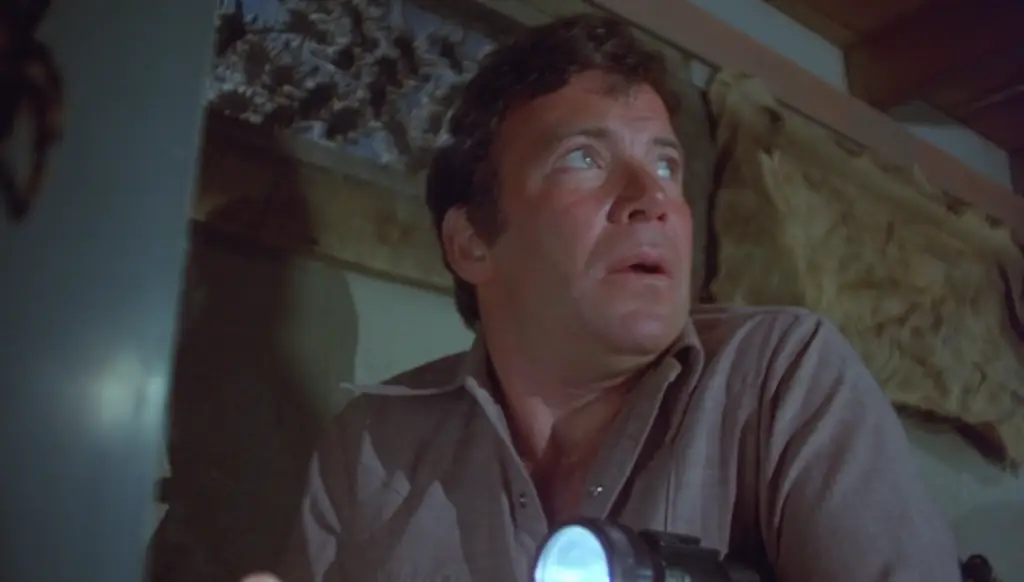
In 1977’s Kingdom of the Spiders, Shatner plays veterinarian Robert “Rack” Hansen, who gets called in after one of rancher Walter Colby’s calves mysteriously dies near Camp Verde, Arizona.
Entomologist Diane Ashley, played by Tiffany Bolling, eventually determines that the animal died from an enormous amount of spider venom.
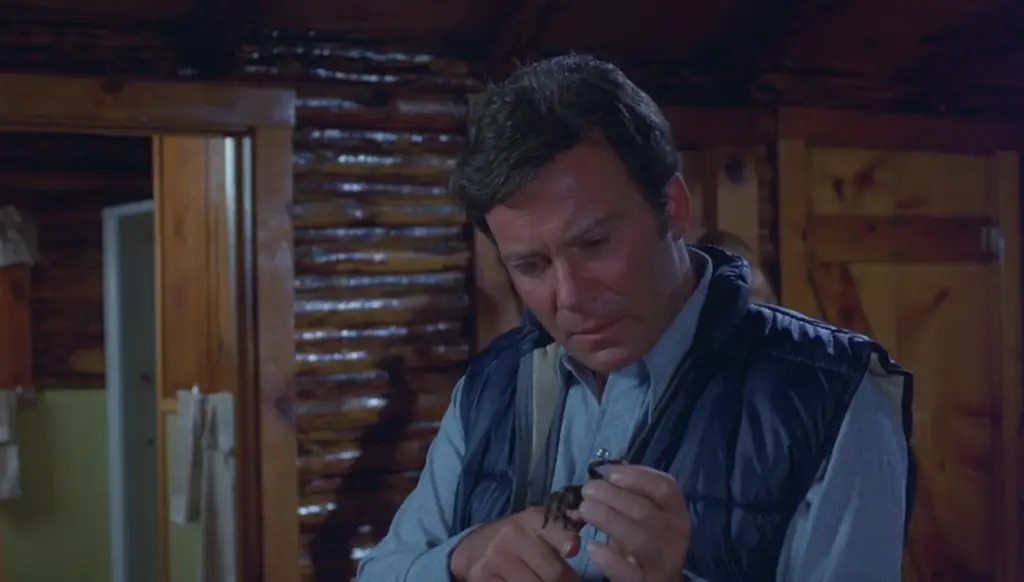
One spider couldn’t have done it. Unfortunately, a whole lot of them could.
The movie belongs to that wonderful 1970s strain of ecological horror in which nature finally gets tired of our shit and decides to fight back.
Pesticides have destroyed the spiders’ natural food supply, so the tarantulas begin adapting by attacking larger prey together.
Eventually, that means us.
But Kingdom of the Spiders had something a lot of creature features didn’t have.
Five thousand actual tarantulas. Not five thousand CGI spiders. Not one spider photographed twelve different ways.
Five. Thousand. Tarantulas.
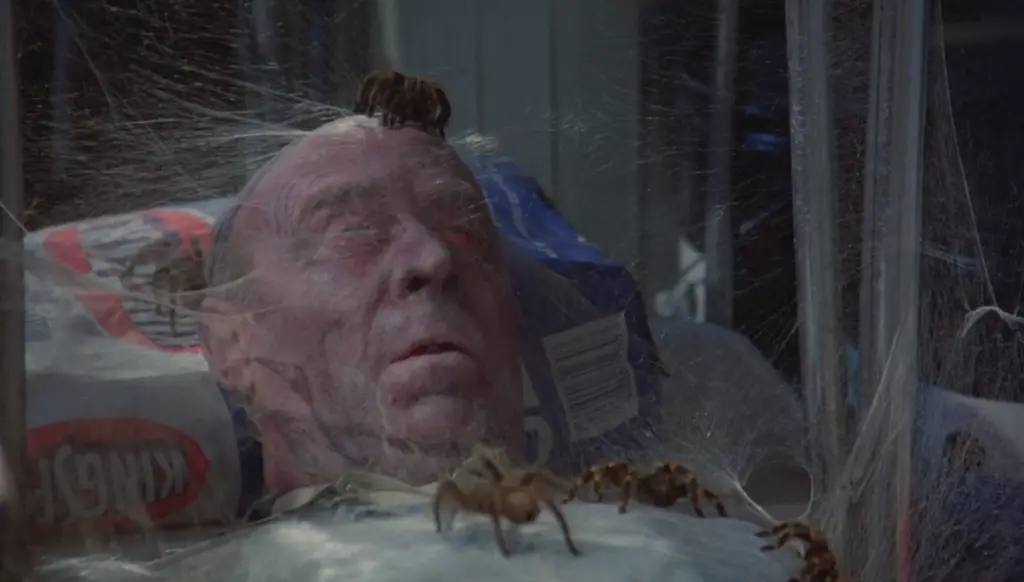
Spider wrangler Jim Brockett imported them from Mexico for the production. Director John “Bud” Cardos later recalled that the creatures were relatively people-friendly, which is comforting information until someone dumps a pile of them on your head.
The production itself sounds nearly as insane as the movie.
Tarantulas are naturally reclusive, so getting thousands of them to enthusiastically chase screaming actors wasn’t exactly easy. Fans and air tubes were sometimes needed to encourage them to move.
They also have cannibalistic tendencies, which meant the production couldn’t simply toss all 5,000 into one giant spider hotel between takes.
They had to be kept separately.
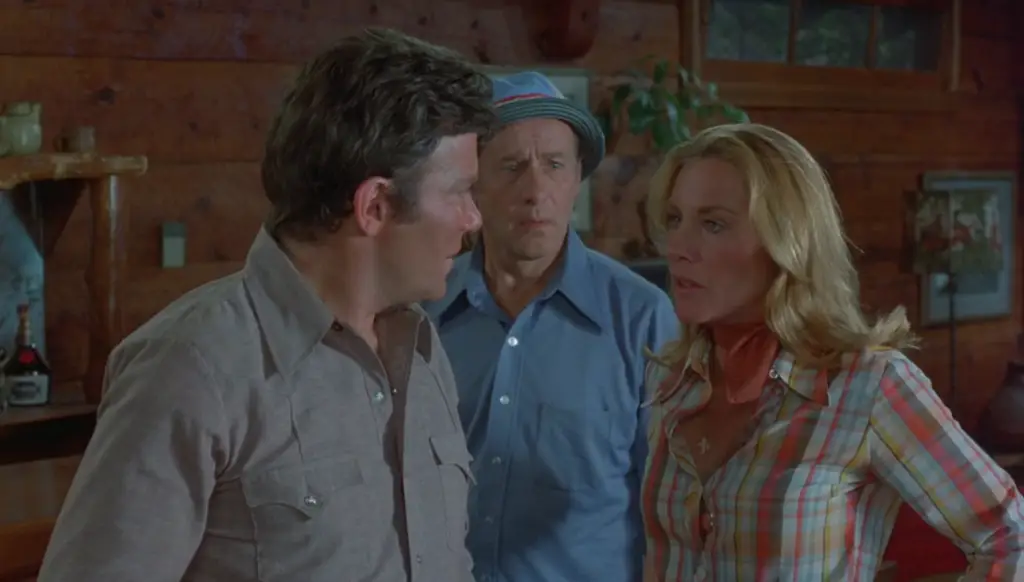
Somewhere behind the scenes of Kingdom of the Spiders was presumably one extremely tired person wondering why they hadn’t taken a nice job on a romantic comedy.
Even casting became a spider test.
Cardos later said he kept tarantulas in small aquariums while auditioning actresses. He’d take one out and put it on the woman reading for the role.
Some ran out. Tiffany Bolling reportedly started playing with it.
Congratulations. You’re hired.
Shatner Needed Drinks and Cheese
Shatner apparently required a different recruitment technique.
Cardos later recalled that Shatner initially turned down Kingdom of the Spiders. So the director went to his house.
They had some drinks. They ate some cheese. By the time Cardos left, Captain Kirk had agreed to fight the spiders.
Never underestimate cheese.
And once Shatner signed on, he didn’t spend the movie safely standing twelve feet away from the creepy-crawlies while somebody waved a rubber tarantula near the camera.
Those things are on him.
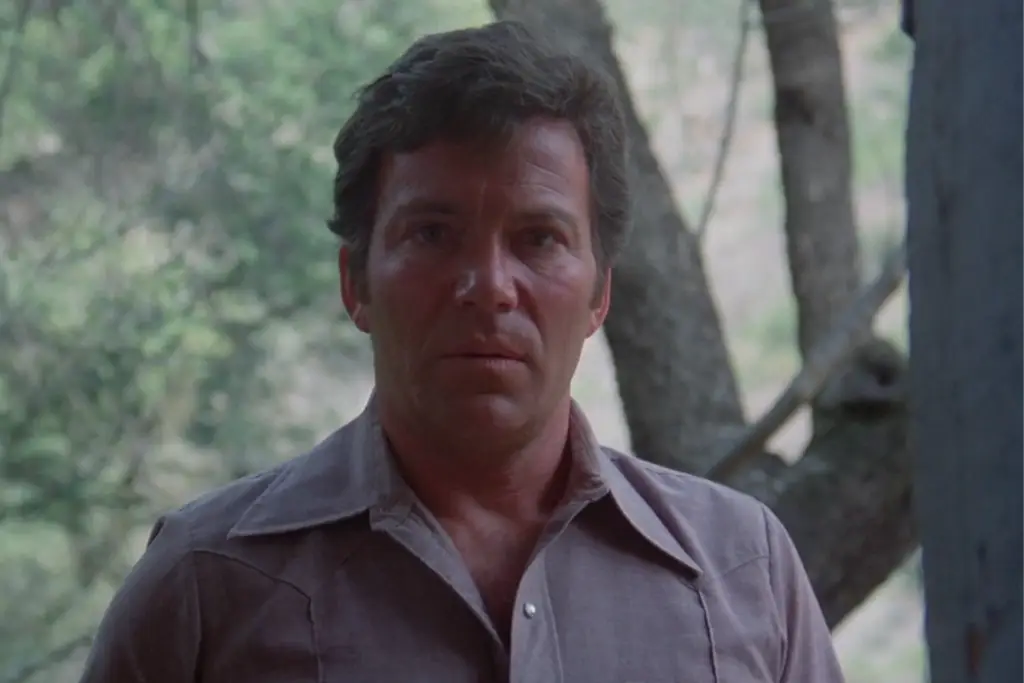
Shatner later talked about how unpleasant the shoot could be because tarantulas have urticating hairs that can cause serious itching. He was crawling around with them, handling them and at times getting covered with them.
Cardos called him a trouper. Shatner even suggested a shot involving a tarantula directly on his face.
You have to respect that level of commitment to a movie about killer spiders.
And underneath the exploitation-movie fun, Kingdom of the Spiders is basically Night of the Lepus‘s meaner, hairier cousin.
Both take place in Arizona. Both start with human interference in the ecosystem. Both involve ordinary animals becoming an extraordinary threat.
Both feature former Star Trek actors trying to stop nature from correcting our mistakes in the most homicidal way possible. Except Night of the Lepus has to work very hard to make a rabbit frightening.
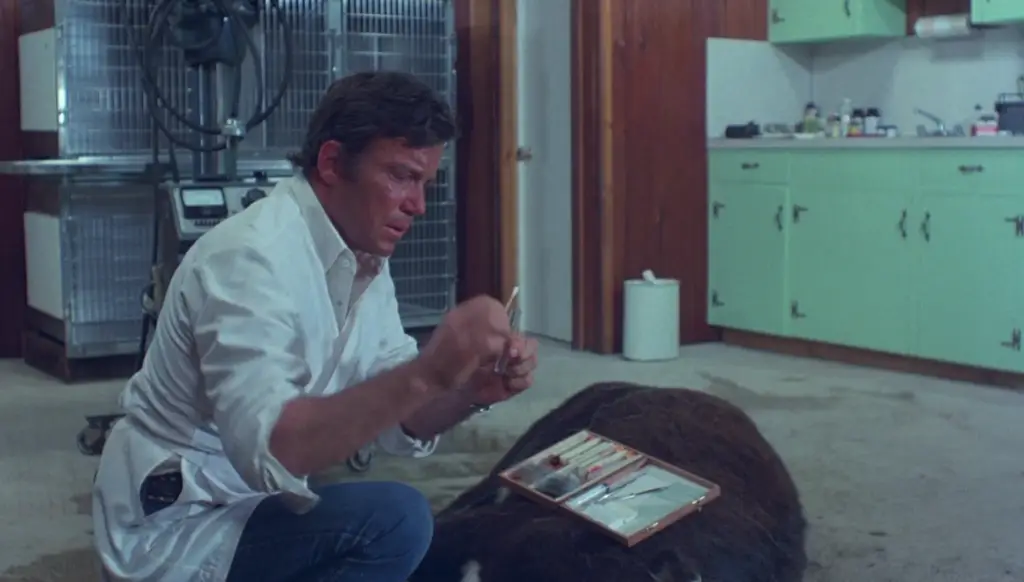
Kingdom of the Spiders starts with spiders. It already has a considerable advantage.
The movie became a cult favorite, reportedly earning around $17 million domestically, and Shatner apparently wasn’t finished with the spiders.
A sequel was later planned through Cannon Films with Shatner expected to star and direct. Cannon advertised the project, but the company’s financial problems ultimately killed it.
Somewhere in another universe, William Shatner directed Kingdom of the Spiders 2.
We were robbed.
Kirk, Spock and Bones Were Trying Other Things
That’s what makes Baffled!, Night of the Lepus and Kingdom of the Spiders more interesting together than they are as three random pieces of 1970s weirdness.
They belong to that strange window when Star Trek had already changed these actors’ lives but hadn’t yet become the permanent institution we know now.
Kelley had spent three seasons as Dr. McCoy. Then he was standing in Arizona trying to contain enormous killer rabbits.
Nimoy had become one of television’s most recognizable characters. Then he was Tom Kovack, racing cars and seeing murders before they happened.
Shatner had commanded the Enterprise. Then he put on a cowboy hat and let real tarantulas crawl all over him.
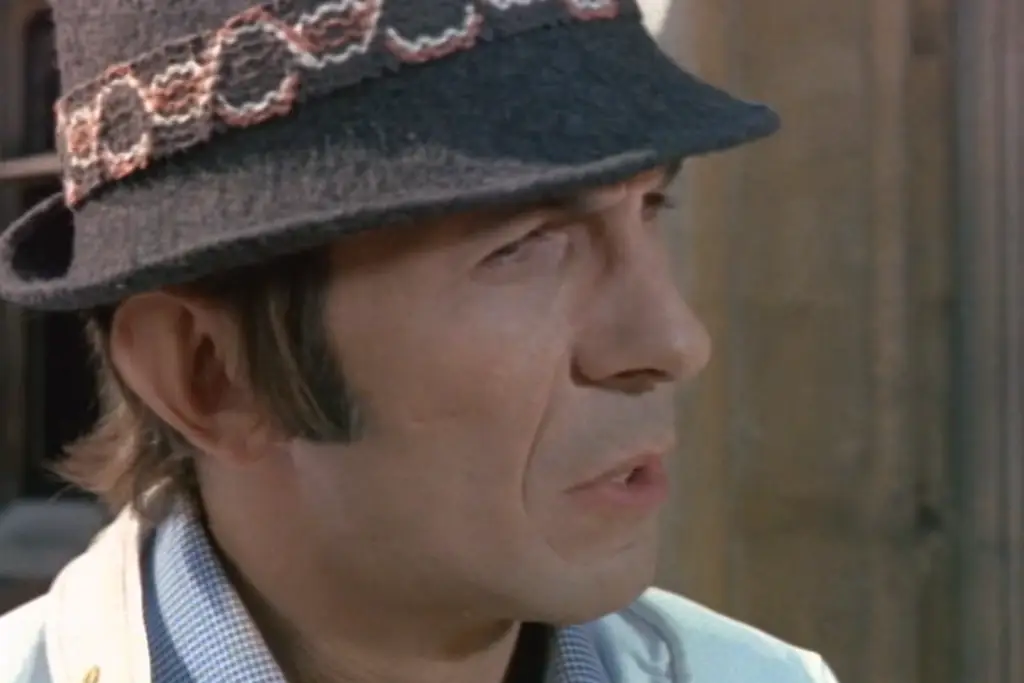
They weren’t hiding from Star Trek, and the franchise itself wasn’t truly gone. Syndication was building the audience that NBC never quite understood, the animated series briefly reunited the crew, and fans were keeping the Enterprise alive.
But there was no guarantee of what came next. That’s what makes these years fun.
We know the ending. They didn’t.
By 1979, Star Trek: The Motion Picture had Shatner and Nimoy back on the Enterprise, with Kelley once again complaining his way through space beside them. What had once been a canceled television series was beginning its second life as a movie franchise.
Eventually there would be more movies, more television series, more captains, more Enterprises and enough Star Trek to make the supposedly dead show from 1969 look immortal.
But before all of that?
Spock was a psychic race-car driver. Bones was dealing with giant carnivorous rabbits. And Captain Kirk was covered in tarantulas.
Forget the final frontier. The 1970s were f*cking weird.
➝