Horror doesn’t evolve politely.
Every so often, a movie comes along that does something audiences aren’t expecting, critics aren’t prepared for, or studios aren’t entirely sure they want. Sometimes it’s a new monster. Sometimes it’s a camera trick, a marketing stunt, a $15,000 movie shot in somebody’s house, or an ending that sends everyone home wondering what the hell they just watched.
Not every movie on this list invented something from scratch. That’s not how movies work. Filmmakers steal, borrow, improve, mutate and occasionally drag an old idea out of the basement and make it terrifying again.
But every one of these changed the conversation.
The Cabinet of Dr. Caligari (1920) — Horror Gets Bent Out of Shape

The Cabinet of Dr. Caligari wasn’t the first horror movie, but more than a century later it still looks like someone had a nervous breakdown with a paintbrush.
Buildings lean at impossible angles. Streets twist into nowhere. Shadows are painted directly onto the scenery. Doors, windows and staircases seem designed by somebody who has a personal grudge against straight lines.
That wasn’t just decoration. Robert Wiene and his designers made the world itself feel unstable. Reality looks wrong because something is wrong.
Then the movie pulls another trick: the framing story changes what we thought we’d been watching. The ending doesn’t simply solve the mystery. It makes us reconsider whose version of reality we’ve trusted.
Horror would spend the next century playing with both ideas: environments that reflect fractured minds and narrators whose version of events may be complete garbage.
Caligari didn’t invent horror. It helped teach horror how to look insane.
Nosferatu (1922) — Dracula With the Sex Appeal Removed
Forget the cape, the accent and the mysterious aristocrat making bedroom eyes at his victims.
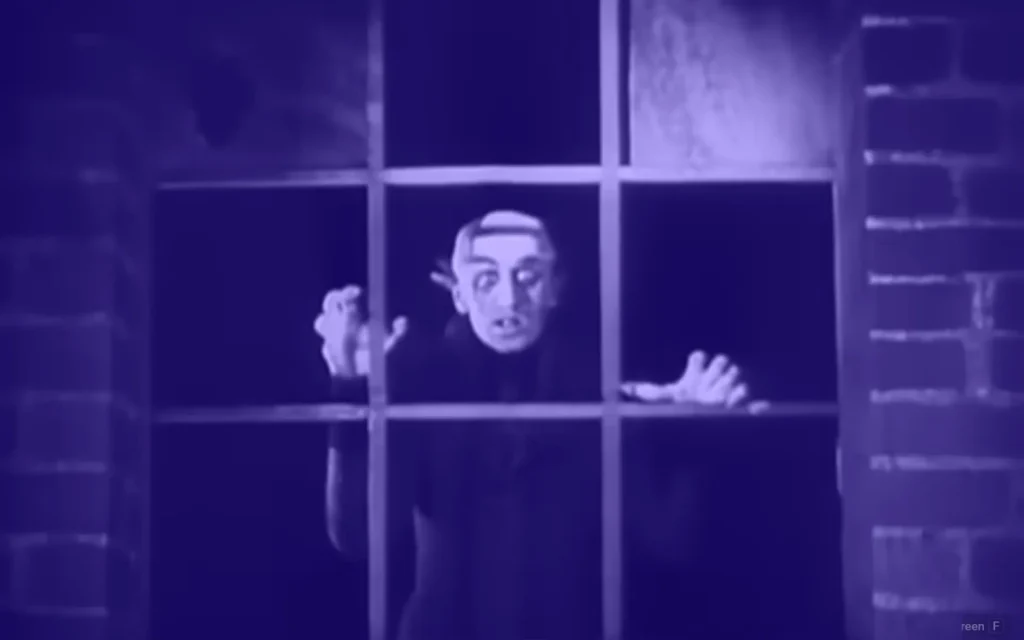
Count Orlok looks like death crawled out from behind the refrigerator.
F.W. Murnau’s Nosferatu was an unauthorized adaptation of Bram Stoker’s Dracula, with names and locations changed in a not-particularly-successful attempt to disguise what everyone was doing. Stoker’s widow, Florence, sued. She won. A court ordered the movie destroyed.
Fortunately for horror history, copies were already circulating.
Max Schreck’s Orlok also gave cinema a very different vampire from the seductive versions that became familiar later. He’s bald, skeletal, ratlike and associated with disease. When he arrives, rats and plague come with him.
He’s not sexy. He’s an infestation.
And that image — the vampire as walking pestilence rather than forbidden lover — has never completely disappeared.
The lawsuit nearly killed Nosferatu. Instead, the movie outlived everybody involved and Count Orlok is still creeping up staircases a century later.
Not bad for a film that legally wasn’t supposed to exist.
Dead of Night (1945) — Horror Comes in Bite-Sized Pieces
Anthology films existed before Dead of Night, but this British production became one of the genre’s most important templates.
Its setup is simple. An architect arrives at a country house and realizes he’s seen everyone there before — in a recurring dream. The guests begin trading stories involving premonitions, a haunted mirror, a ghostly encounter and other assorted bad news.
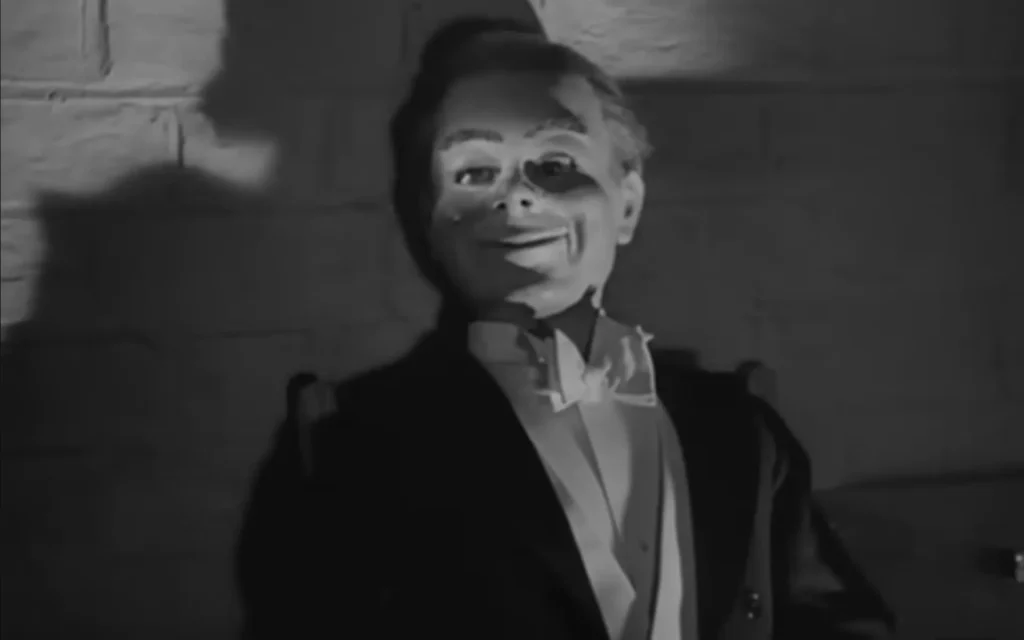
Then there’s Hugo.
Michael Redgrave’s segment about a ventriloquist and his increasingly sinister dummy remains the movie’s showstopper because it never gives you the comfort of knowing exactly what’s happening. Is Hugo alive? Is the ventriloquist losing his mind? Does it really matter once the dummy starts staring at you?
But Dead of Night saves its nastiest trick for the framing story. Instead of neatly wrapping everything up, the movie folds back on itself. The nightmare becomes a loop, and suddenly the anthology isn’t just a collection of spooky stories. It’s a trap.
Later British anthology horror — from Amicus films to modern shows like Inside No. 9 — would owe plenty to it.
Psycho (1960) — Hitchcock Kills the Person You Thought the Movie Was About
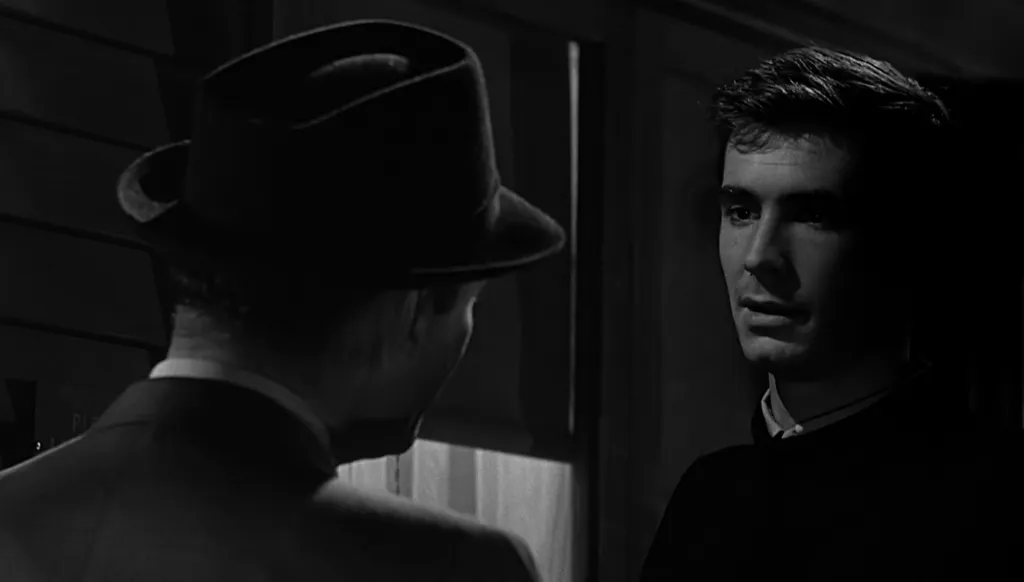
Imagine going into Psycho in 1960 without knowing anything.
Janet Leigh is the star. She’s carrying the story. She’s made off with stolen money. We’re following her escape.
And then Alfred Hitchcock murders her. Not in the finale. In the shower.
The genius of Psycho wasn’t simply that the shower scene was shocking. Hitchcock had spent the first part of the movie teaching the audience what story they were watching — and then threw that story in the trash.
Now what?
Norman Bates is what.
Horror had certainly dealt with murderers and disturbed minds before, but Norman was unnervingly ordinary. He wasn’t Dracula arriving from Transylvania or some creature crawling from a lagoon. He was the shy guy behind the motel desk.
The shower scene’s frantic editing and Bernard Herrmann’s screaming strings made the violence feel more brutal than what Hitchcock actually showed. The movie demonstrated that suggestion, rhythm and editing could make an audience swear they’d seen things that barely appeared onscreen.
And killing Janet Leigh told viewers something even worse: the movie didn’t owe them safety.
Peeping Tom (1960) — The Camera Is the Murder Weapon
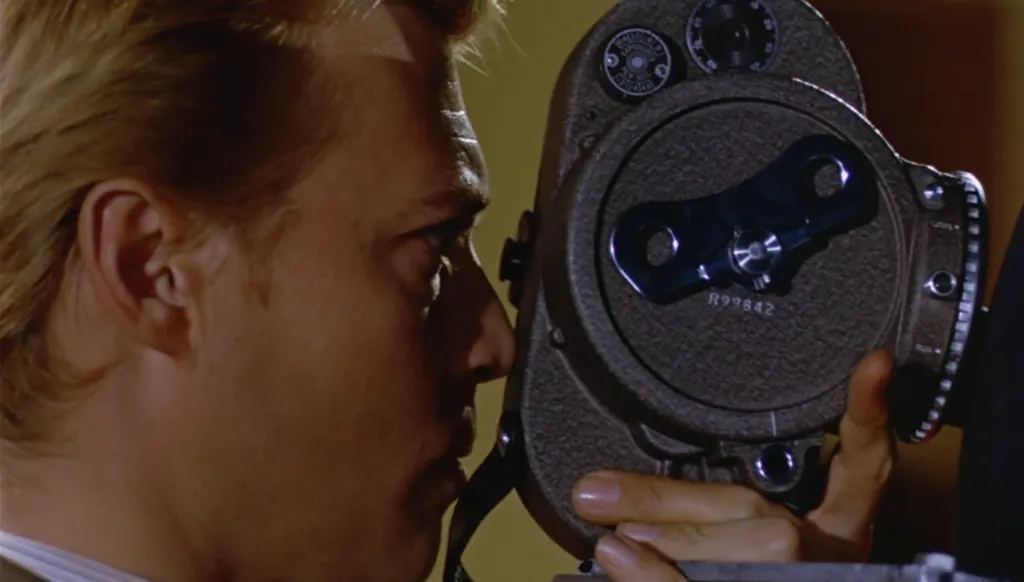
Peeping Tom arrived in Britain only months before Psycho opened in America.
One became an instant classic. The other got practically dragged into the street and beaten by critics.
Michael Powell’s movie follows Mark Lewis, a cameraman who murders women while filming their fear. But Powell doesn’t allow the audience to observe him comfortably from a distance. He repeatedly places us behind Mark’s camera.
We’re watching him watch them.
That’s the nasty little trick.
Peeping Tom turns moviegoing itself into part of the horror. Why do we want to see this? Why are we looking? What’s the difference between Mark recording terror and an audience paying to watch terror recreated for entertainment?
British critics despised it, and the backlash badly damaged Powell’s standing. Decades later, the movie was reassessed as one of the most daring psychological horror films of its era.
Turns out the movie wasn’t necessarily too sick. It may have just asked the question too early.
Night of the Living Dead (1968) — Your Neighbors Want to Eat You
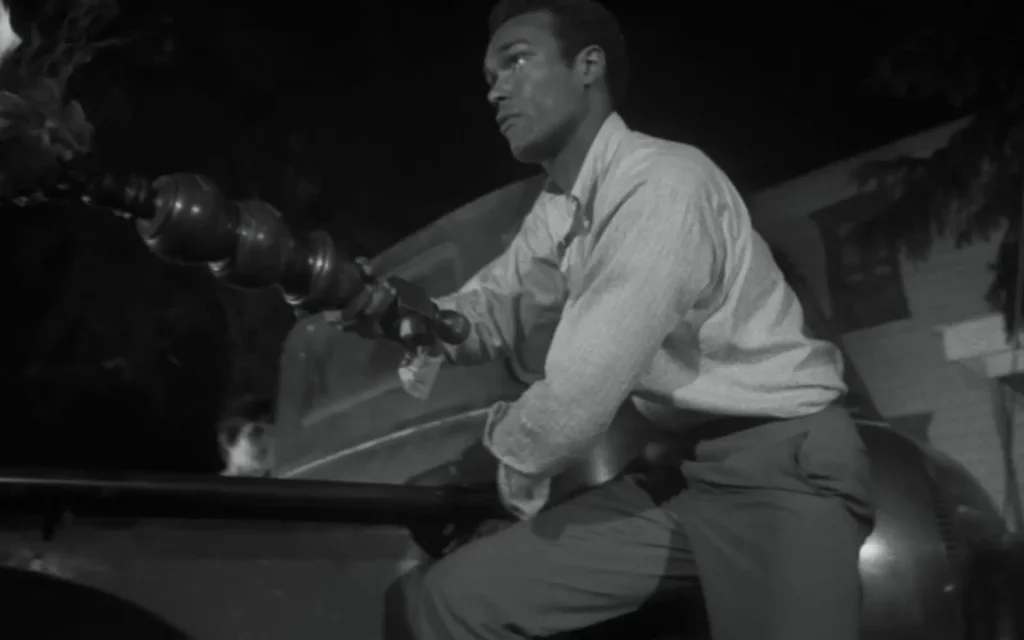
Zombie movies existed long before George Romero, but Romero’s zombies were different.
Technically, he didn’t even call them zombies. But his anonymous flesh-eating dead became the version popular culture copied until “zombie” basically meant what Night of the Living Dead had shown us.
These weren’t exotic creatures tied to distant rituals. They were us. The guy down the road. Somebody’s brother. Somebody’s daughter. Dead people outside the house trying to get back in.
Romero shot the movie on the cheap in black and white, which makes it feel less like a polished Hollywood production and more like footage from somewhere that has genuinely gone to hell.
Then came the ending.
Ben survives the night only to be shot by a posse the following morning. Duane Jones was Black, and the images of his body being handled and burned landed in an America already convulsed by racial violence. Romero later said Jones had simply been the best actor among them, but whatever the original intent, audiences couldn’t separate those images from the country outside the theater.
There was one more twist nobody planned. When the film’s title was changed from Night of the Flesh Eaters, the distributor failed to put the copyright notice on the new title card. Under the law at the time, the mistake dumped the movie into the public domain.
Everybody could show it. Everybody could copy it. And everybody did.
Rosemary’s Baby (1968) — The Nice Neighbors Are the Problem
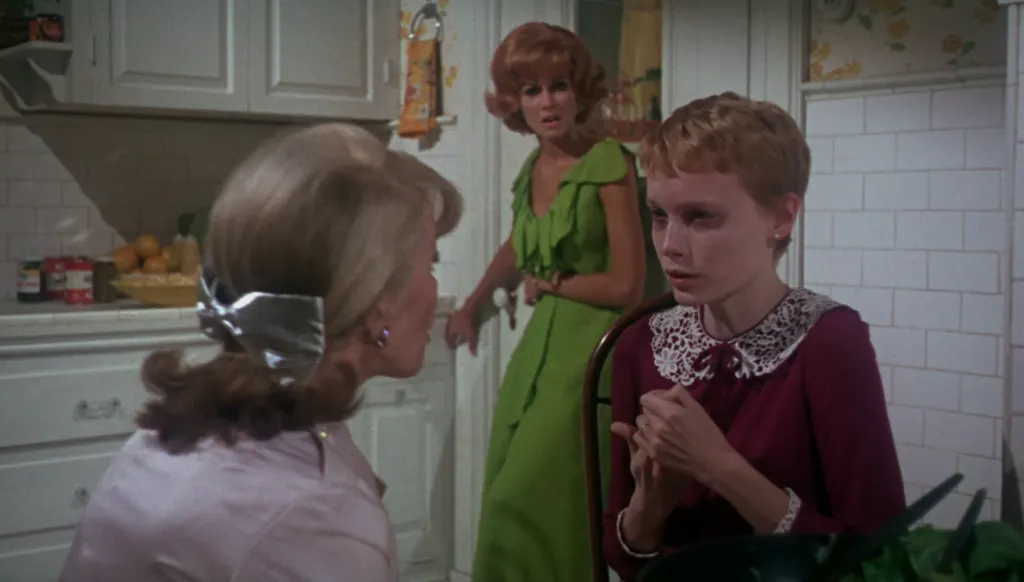
Rosemary’s Baby doesn’t need a castle. It has an apartment building. and that’s even worse.
Although, funny enough, it did need a Castle. William Castle, the horror showman famous for theater gimmicks like flying skeletons and vibrating seats, bought the rights to Ira Levin’s novel and wanted to direct the movie himself. Paramount wasn’t interested in letting the guy behind The Tingler loose on what it saw as a prestige production, so Roman Polanski got the directing job and Castle stayed on as producer. He even sneaks into the movie for a cameo.
Rosemary Woodhouse is surrounded by people who insist they know what’s best for her. Her husband dismisses her. Her doctor dismisses her. Her neighbors smother her with attention. Her own body becomes something other people discuss, control and make decisions about.
And she’s expected to smile through it.
That’s where the movie’s horror still bites. The Satanic conspiracy is obviously the headline attraction, but the machinery underneath it is horribly ordinary: isolation, manipulation, medical authority and a woman repeatedly being told not to trust herself.
The movie helped make domestic spaces fertile ground for horror. Evil didn’t need to come crashing through the door.
Sometimes it was already inside, bringing you dessert.
Kolchak: The Night Stalker (1972) — The Monster Hunter With a Press Pass
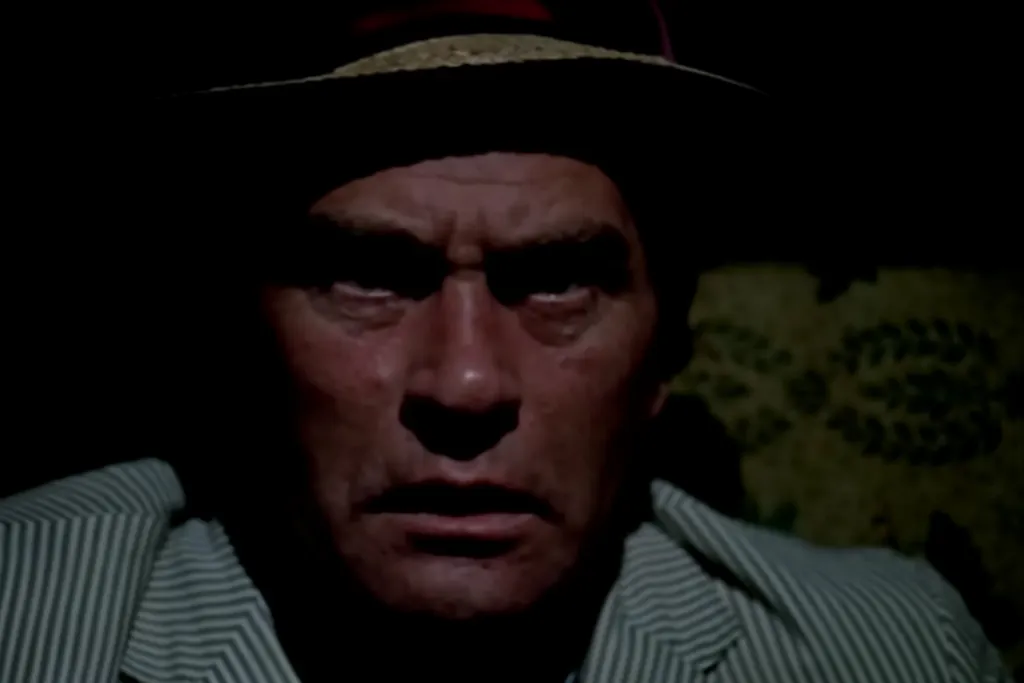
Carl Kolchak didn’t have superpowers, an FBI badge or a secret government budget.
He had a cheap suit, a camera and an editor who was perpetually sick of his crap.
Perfect.
The character first appeared in the 1972 ABC TV movie The Night Stalker, with Darren McGavin playing a Las Vegas reporter investigating murders that appear to be the work of an actual vampire. It became the highest-rated television movie aired to that point and led to another TV movie, The Night Strangler, followed by the weekly series in 1974.
The series sent Kolchak after vampires, zombies, witches, aliens and whatever other creature ABC could afford that week.
But the formula mattered more than the monsters. One stubborn investigator sees something impossible. Authorities refuse to believe him. He keeps digging anyway.
Sound familiar?
Chris Carter has openly named Kolchak as one of the childhood shows that inspired The X-Files. Once you know that, the family resemblance is impossible to miss.
Mulder got the FBI basement office.
Kolchak got yelled at by his editor.
Personally, I think Kolchak got the better deal.
The Exorcist (1973) — Horror Becomes Prestige Entertainment
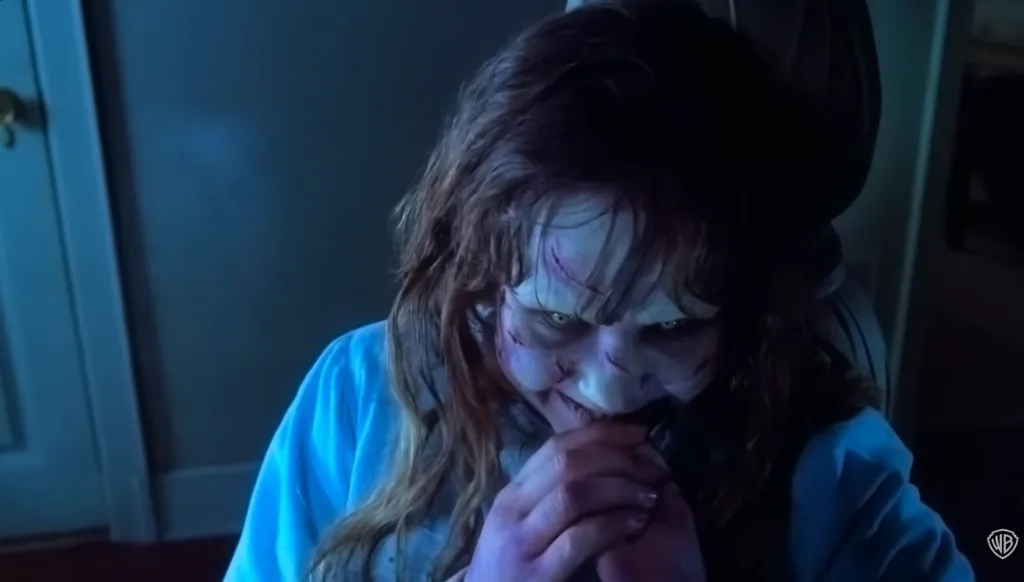
People didn’t merely go see The Exorcist. They lined up for it.
William Friedkin treated demonic possession with an almost documentary seriousness. Before anyone reaches for holy water, Regan is subjected to tests, doctors, needles and medical procedures. Her mother desperately searches for a rational explanation because the irrational one is too horrible to accept.
That clinical approach is part of what made the supernatural material hit so hard.
The movie was also enormous business and earned ten Academy Award nominations, including Best Picture. Horror could no longer be dismissed quite so easily as cheap Saturday-night junk. It could be shocking, ugly, controversial, wildly profitable — and sitting at the Oscars with everybody else.
Possession movies had existed before The Exorcist. After The Exorcist, Hollywood wanted a lot more of them.
Black Christmas (1974) — The Slasher Before the Slasher Boom
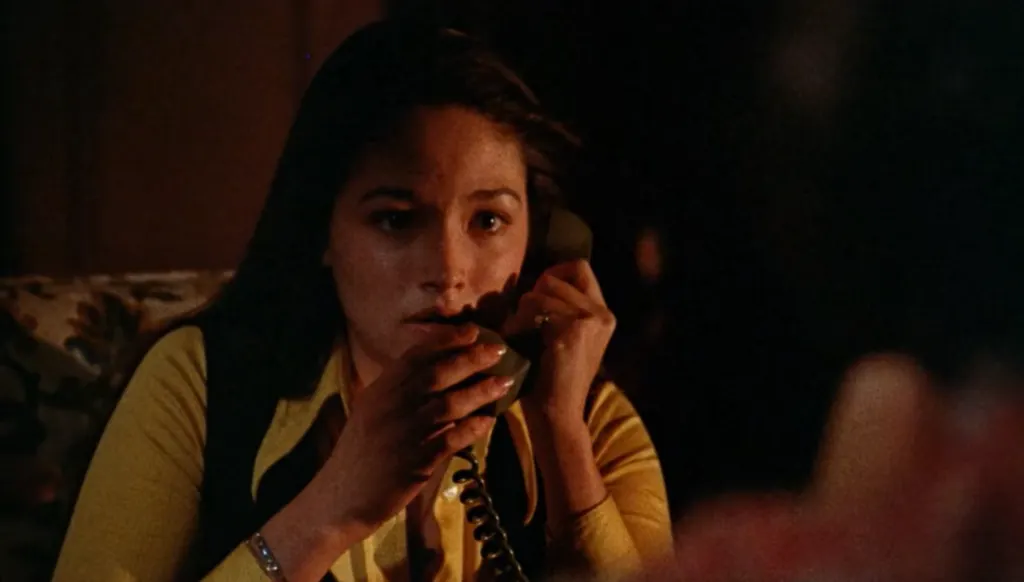
Four years before Michael Myers wandered into Haddonfield, somebody was already creeping around a sorority house at Christmas.
Black Christmas has almost everything we’d later associate with slashers: an unseen killer, obscene phone calls, young women being stalked, killer POV shots, a holiday setting and a survivor who doesn’t fit the later virginal “final girl” stereotype particularly well.
Jess is pregnant and planning an abortion despite her boyfriend’s objections — a remarkably blunt storyline for a 1974 horror film.
Meanwhile, the killer is already inside the house.
That’s what makes Black Christmas so effective. We know something the women don’t. Billy isn’t repeatedly breaking in; he never left.
And the movie refuses to give us the usual satisfaction of understanding him. No grand unmasking. No tidy explanation. No psychiatrist arriving to tell everybody what happened.
The phone rings.
That’s it.
Five years later, When a Stranger Calls would build one of horror’s most famous opening sequences around that same nightmare: the threatening calls are coming from inside the house. Black Christmas was already playing with it in 1974 — and Billy never even had the decency to leave.
Halloween would later turn many of these ingredients into a blockbuster formula. But Black Christmas was already cooking with them.
The Texas Chain Saw Massacre (1974) — Horror Gets Filthy

Few movies look like they smell as bad as The Texas Chain Saw Massacre.
Heat. Sweat. Rotting meat. Dust. Bones. That house.
Tobe Hooper’s movie feels disgusting before Leatherface even gets the chainsaw running.
And despite its reputation, it isn’t particularly bloody. The violence feels worse than it is because everything surrounding it is so relentless. The sound design screams at you. The camera gets too close. The Texas heat seems to radiate off the screen.
That wasn’t entirely movie magic, either. Hooper shot the film during a Texas summer, and the production was every bit as miserable as the movie looks. The farmhouse was filled with real animal parts obtained from a slaughterhouse, the heat was brutal, and cast and crew members became nauseated during filming. Hooper didn’t simply make the place look disgusting. They were working in it.
Then Leatherface appears and kills somebody with a hammer like he’s performing another household chore.
There’s no grand speech. No explanation.
Whack.
Door slams.
Done.
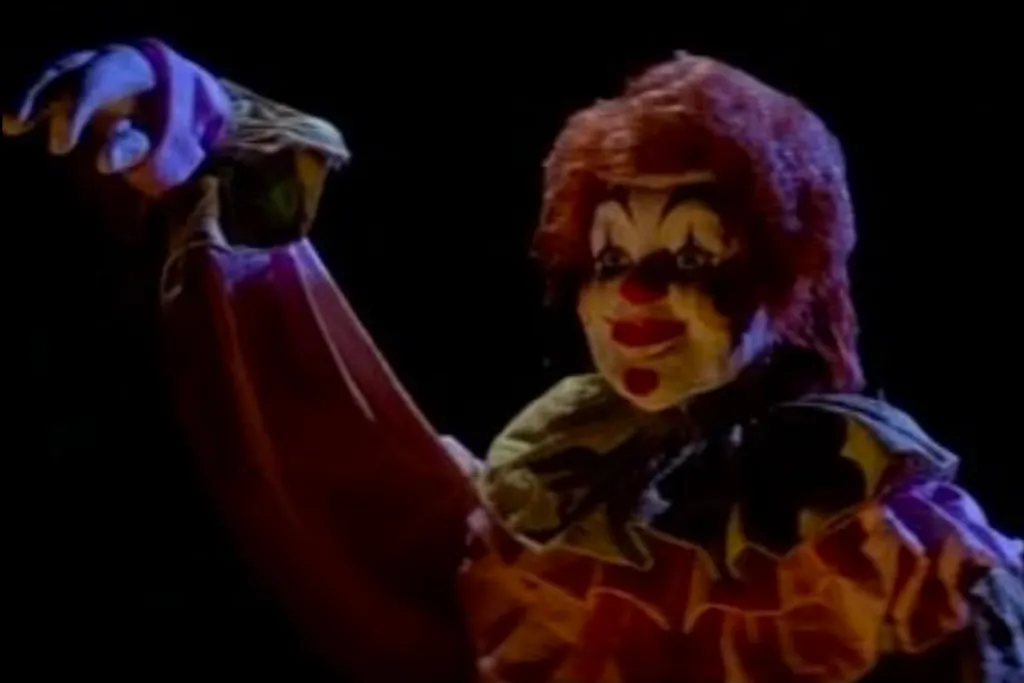
Tobe Hooper is also one of those directors whose career tends to get reduced to a couple of titles. Everybody knows The Texas Chain Saw Massacre, and Poltergeist has generated decades of arguments over who really directed what. But Hooper also directed the original 1979 Salem’s Lot miniseries, Lifeforce, Texas Chainsaw Massacre 2 and The Funhouse, a wonderfully nasty 1981 carnival horror movie that doesn’t get talked about nearly enough.
That last one in particular deserves more love. The Funhouse takes a place that’s already a little creepy after dark — a carnival — and traps four teenagers inside it overnight with a killer. Hooper didn’t need Leatherface or a Texas farmhouse to make a place feel like somewhere you desperately wanted to leave.
But none of those movies look — or practically smell — like this one.
The Texas Chain Saw Massacre helped prove how far low-budget horror could go by leaning into texture, atmosphere and pure sensory assault instead of expensive spectacle.
It doesn’t feel like Hollywood.
It feels like Hollywood lost your address and something else found you instead.
The Rocky Horror Picture Show (1975) — The Audience Hijacks the Movie
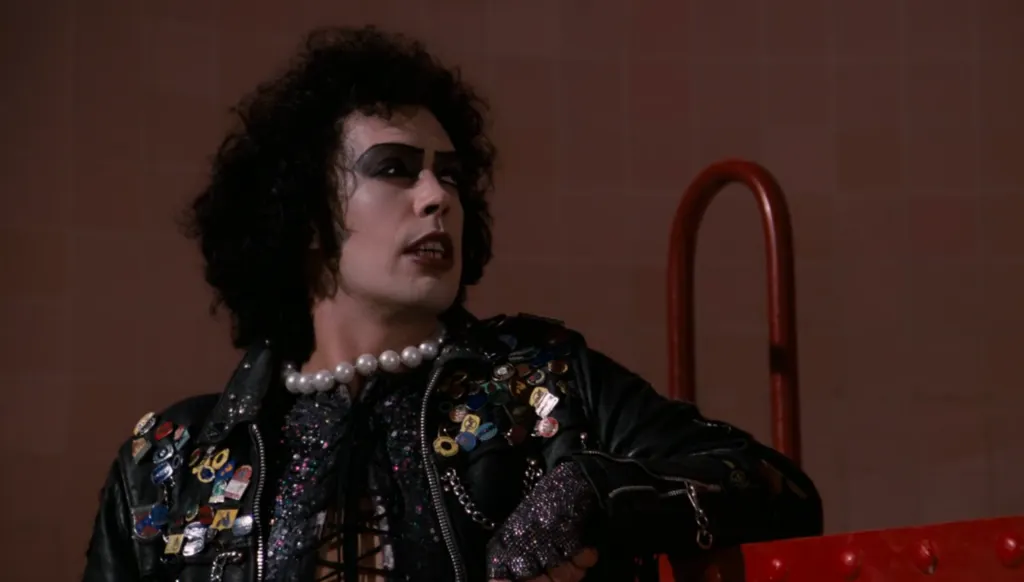
When The Rocky Horror Picture Show first arrived, mainstream moviegoers weren’t exactly stampeding the box office.
Then the midnight crowd found it. And things got weird.
Fans began dressing as the characters, shouting responses at the screen, acting out scenes and bringing props. Watching Rocky Horror became only half the point.
The audience was the other half.
That’s what made its afterlife so important. Movies were supposed to play while audiences sat down, shut up and watched. Rocky Horror turned the theater into a party, performance space and clubhouse for outsiders.
The movie itself was already gleefully scrambling horror, science fiction, glam rock, sex, camp and old B-movie imagery. Tim Curry’s Frank-N-Furter didn’t ask permission to enter the room. He simply took possession of it.
But the fans made Rocky Horror immortal.
Plenty of movies become cult films. This one built an actual ritual.
Jaws (1975) — Summer Vacation Is Cancelled
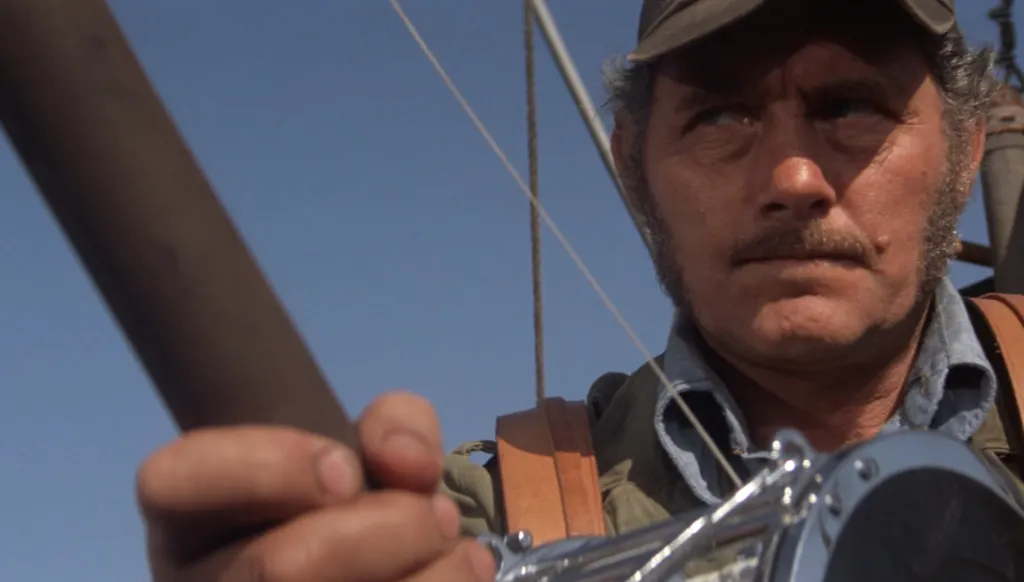
The shark barely worked.
Thank God.
Steven Spielberg’s malfunctioning mechanical shark forced him to keep the creature offscreen far more than planned, leaving John Williams’ two-note score, underwater POV shots and our own imaginations to do the dirty work.
Turns out imagining a giant shark underneath you is plenty.
But Jaws changed more than monster movies. Universal opened it unusually wide for the era and backed it with a huge national advertising campaign. It became the first film to earn more than $100 million at the domestic box office and helped establish the summer blockbuster as Hollywood’s new favorite money-making machine.
One clarification: Jaws did not invent the saturation release. Other movies had already opened extremely wide. What it demonstrated was how terrifyingly effective the combination could be when the movie was actually good.
After Jaws, summer stopped looking like Hollywood’s dumping ground.
It looked like payday.
Halloween (1978) — Now Everybody Wants a Guy With a Knife
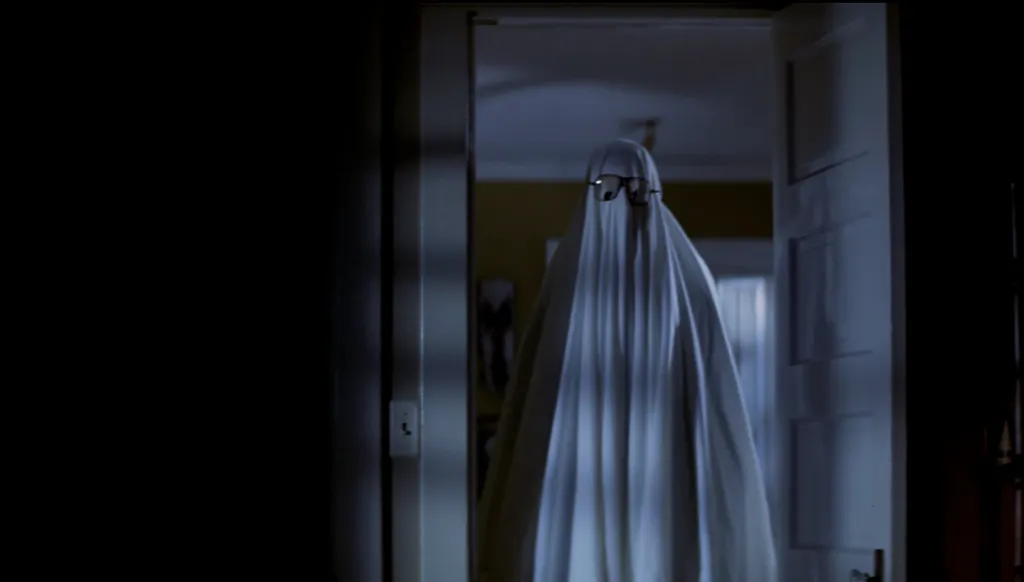
John Carpenter didn’t invent the slasher. He made the version everybody wanted to copy.
Halloween took pieces already visible in Psycho, Black Christmas and other earlier films and reduced them to an incredibly efficient machine:
Quiet suburb. Teenagers. Holiday. Masked killer. Final girl. Simple score.
Go.
Michael Myers barely needs a personality because the lack of one is the point. He’s “The Shape.” Dr. Loomis spends the movie insisting there’s nothing behind Michael’s eyes except evil, and Donald Pleasence sells it with such conviction that eventually we stop thinking of Michael as a guy in a painted William Shatner mask.
He’s the Boogeyman.
Then Halloween became a massive independent hit, and suddenly everybody wanted their own Boogeyman. And the slasher floodgates opened.
Alien (1979) — Nobody Can Hear You Scream, but They Can Hear You Panic
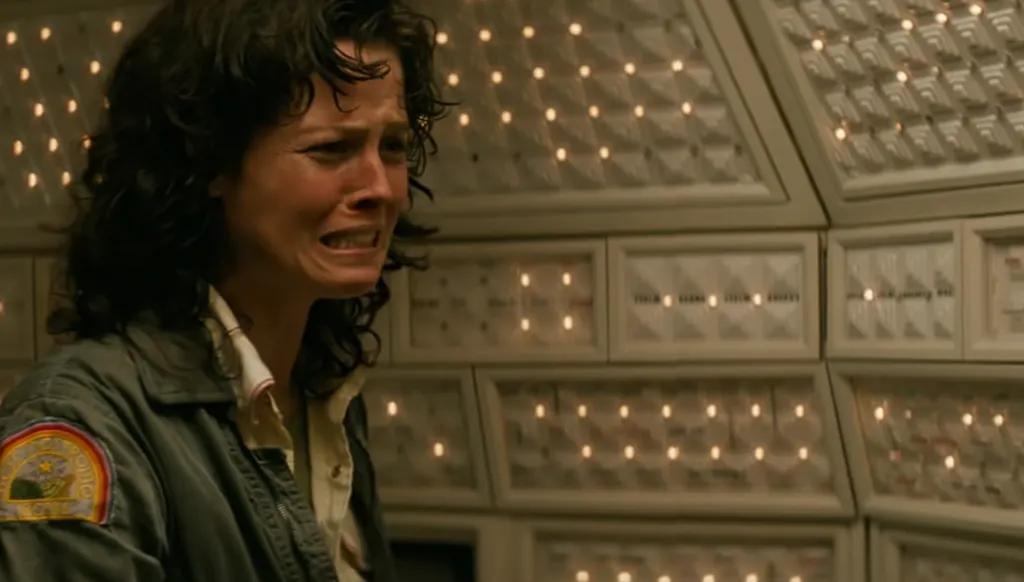
Alien has spaceships, cryosleep and a giant extraterrestrial.
It’s also basically a haunted-house movie. The house just happens to be floating through space.
Ridley Scott trapped a working crew inside the Nostromo with H.R. Giger’s xenomorph, a creature that looked biological, mechanical and sexual in all the wrong ways.
And then there was Ripley.
What’s striking about Ellen Ripley in the first movie is that she isn’t introduced as some unstoppable action hero. She’s competent. She follows procedure. She makes sensible decisions that other people ignore.
That’s enough.
The movie doesn’t need to announce that she’s groundbreaking. It simply lets her survive because she’s good at her job.
Alien proved science fiction and horror didn’t have to take turns. You could have the world-building of one and the primal terror of the other.
Space wasn’t wondrous anymore. Something was hiding in the air vent.
The Evil Dead (1981) — Horror Goes DIY
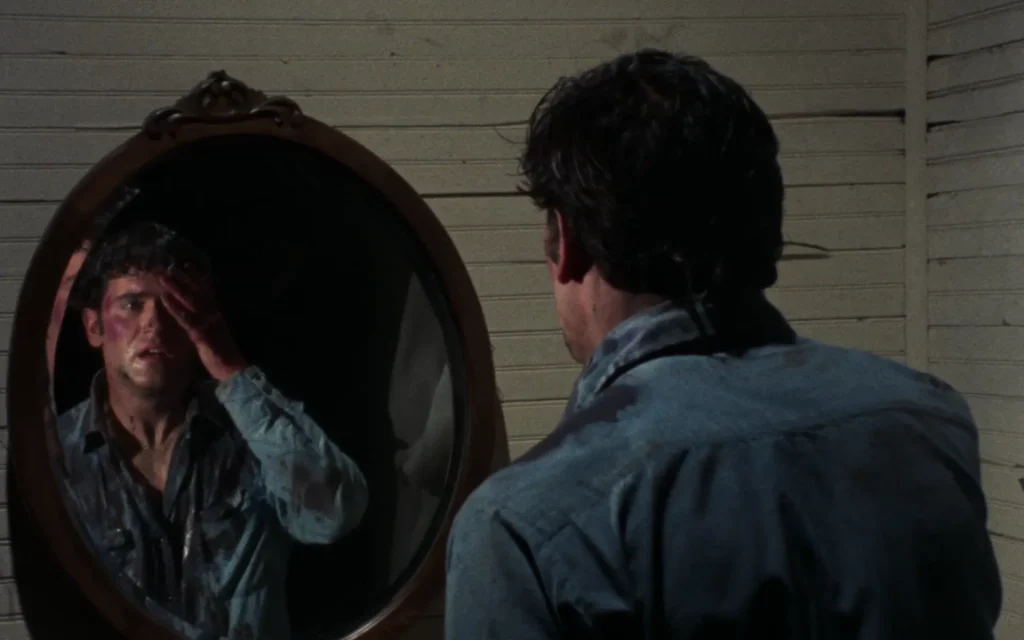
Sam Raimi didn’t have a studio budget. He had some friends, a 16mm camera and a cabin in Tennessee.
The Evil Dead follows five young people who head into the woods, find a tape recording they really should have left alone and unleash something nasty. The story is simple. The way Raimi filmed it wasn’t.
When the crew couldn’t afford a Steadicam, they built their own version by mounting the camera to a long piece of wood and running through the woods with it. Those rushing POV shots became one of the movie’s signatures, making the evil itself feel like something barreling through the trees.
The rest of the production was just as homemade. Friends and family made up much of the crew. The effects relied on whatever they could build, rig, animate or cover in fake blood. Raimi had already made the short Within the Woods to help convince investors that he could pull off a feature, and somehow this group of Reel Rebels turned all that ingenuity into a movie that eventually spawned an entire franchise.
The Evil Dead didn’t look expensive. It looked insane.
And for generations of independent horror filmmakers without much money, that was probably a hell of a lot more useful.
The Fly (1986) — The Monster Is What’s Happening to You
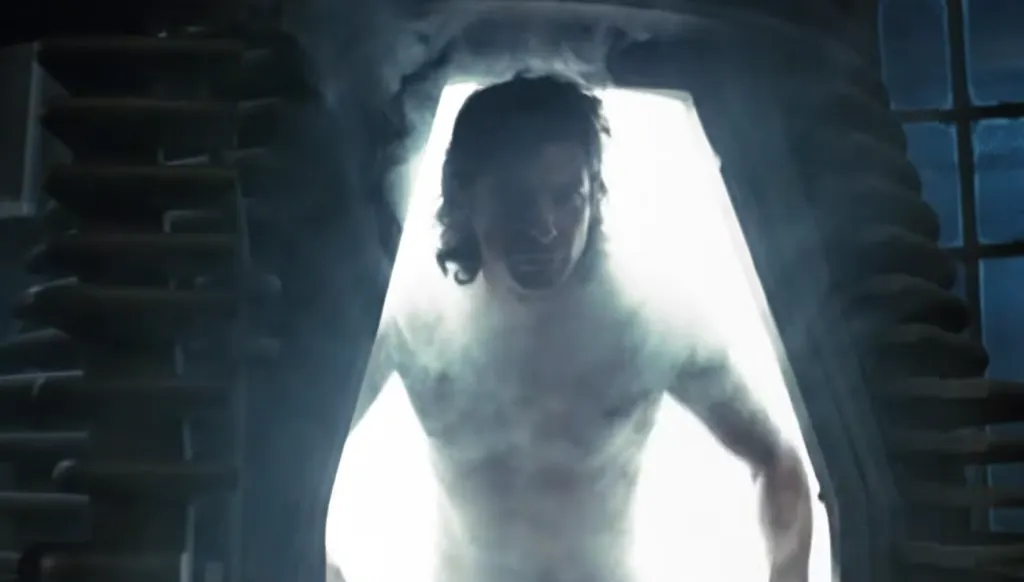
David Cronenberg took a 1958 science-fiction movie and turned it into a breakup story involving vomit, fingernails and catastrophic genetic failure. Talk about romance!
Jeff Goldblum’s Seth Brundle doesn’t become a monster all at once. That’s what makes The Fly horrible. He deteriorates into one.
At first, the accident seems almost beneficial. He’s stronger. More energetic. More confident.
Then his body begins collecting parts it no longer needs.
Teeth. Fingernails. Ears.
Brundle keeps documenting the process because he’s a scientist and because, somewhere underneath all that changing flesh, he’s still himself.
And that’s what makes it so tragic.
Cronenberg was already one of body horror’s defining filmmakers long before The Fly, so the movie didn’t invent the form. What it did was bring his obsessions to a larger mainstream audience with an unusually emotional story.
The effects are disgusting. The heartbreak is worse.
Scream (1996) — The Slasher Realizes Everyone Knows the Rules
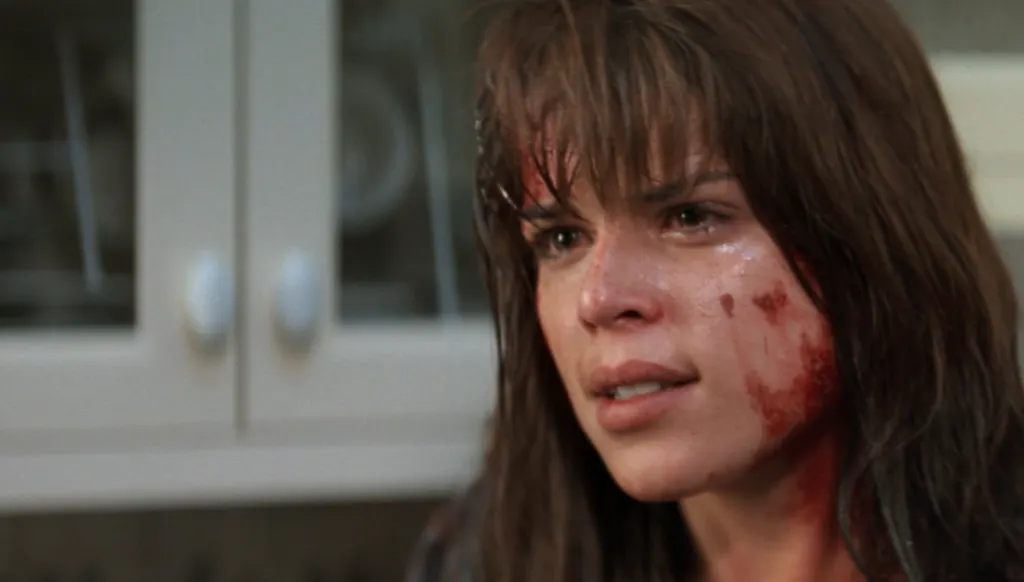
By 1996, slasher movies had a problem. Everybody knew how they worked.
Wes Craven and screenwriter Kevin Williamson decided that instead of pretending otherwise, they’d make that the whole point.
The characters in Scream have seen horror movies. They know the clichés. They debate the rules. And they still get murdered.
The opening with Drew Barrymore pulled a Psycho-style trick on a new generation. She was the biggest name in the marketing, sitting right there on the poster.
Then Ghostface killed her before the opening credits. Message received.
But Scream wasn’t just making jokes about horror. The murder mystery worked. The scares worked. Sidney Prescott worked.
Even Ghostface was different. He tripped over furniture. People punched him. He wasn’t an unstoppable supernatural tank. There was always a person under that costume.
The movie helped revive the commercially exhausted slasher by acknowledging that the audience had become experts.
Horror fans knew the rules now. So the rules became part of the game.
The Blair Witch Project (1999) — The Internet Joins the Marketing Department
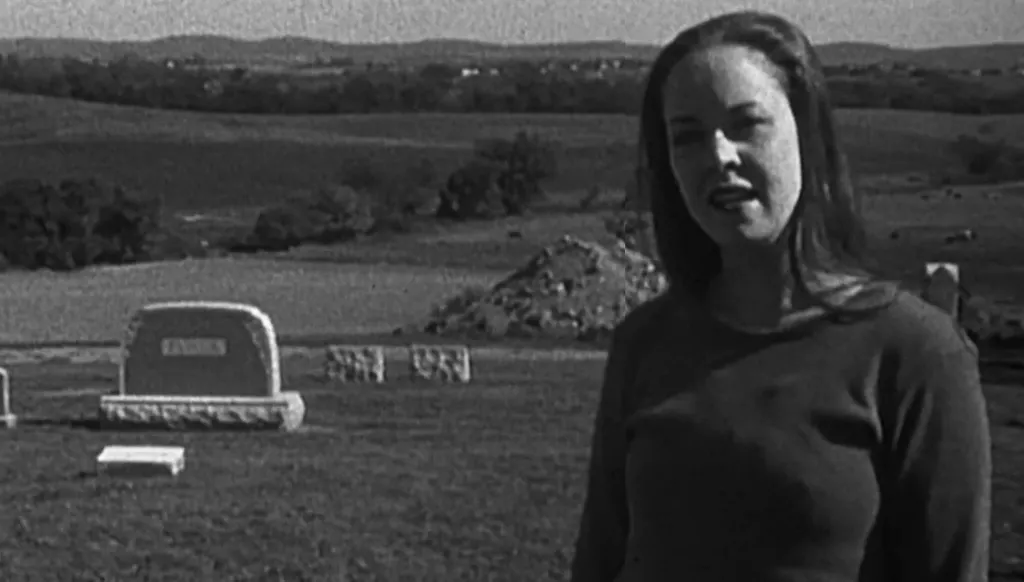
The Blair Witch Project wasn’t the first found-footage horror movie. But it was the one that made millions of people suddenly care about found footage.
Daniel Myrick and Eduardo Sánchez sent three unknown actors into the Maryland woods with cameras, skeletal instructions and a story built around a fictional local legend. Much of the dialogue was improvised.
Then the marketing took over.
The filmmakers had already built a website treating the Blair Witch mythology and missing students like a real case. Artisan amplified the illusion after acquiring the movie. Fake documents appeared online. Missing-person material circulated. Even IMDb listed the actors as missing or presumed dead.
In 1999, when people were still figuring out exactly how much nonsense the Internet could convince them was real, it was brilliant.
The movie itself barely shows anything: sticks, noises, a bundle outside a tent, somebody standing in a basement corner. That’s about it. And audiences lost their minds.
Blair Witch proved you didn’t need to show the monster if you could convince people there might actually be one.
The Ring (2002) — J-Horror Crawls Through the Television
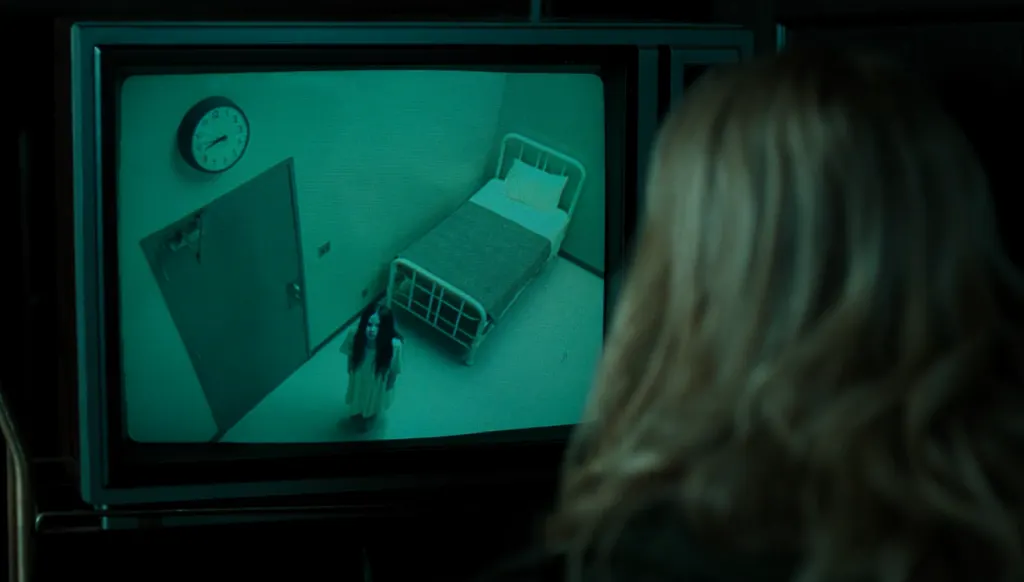
A videotape. Seven days. That’s all the sales pitch The Ring needed.
Gore Verbinski’s remake of Hideo Nakata’s Ring/Ringu became the breakthrough American hit of the early-2000s J-horror remake wave.
And it felt different from the slashers that had dominated American horror. Cold. Wet. Gray. Quiet.
The threat spread through technology itself. Watching the cursed tape doomed you, turning an ordinary television into something you suddenly didn’t want sitting across from your bed.
Then Samara climbed out of one.
The movie’s success helped trigger a rush of American remakes of Japanese horror, including The Grudge, Dark Water and Pulse.
Hollywood did what Hollywood always does when something works. It ordered twelve more.
Paranormal Activity (2007) — Fifteen Grand and a Bedroom Door

By the late 2000s, horror had become increasingly glossy, brutal and expensive-looking.
Then Oren Peli pointed a camera at a bed.
Paranormal Activity cost roughly $15,000 to shoot and was filmed in about a week in Peli’s own house with unknown actors.
For long stretches, almost nothing happens. And that’s the trick.
The camera sits there while Katie and Micah sleep, and the audience starts scanning the image for movement.
Did that door move? Was that shadow there before? What the hell was that noise?
Instead of cutting away from inactivity, the movie weaponized it.
Paramount eventually used an unusual rollout that encouraged viewers to “demand” screenings in their cities, turning audience interest into part of the marketing campaign.
The result was one of horror’s great return-on-investment stories and another reminder that the genre doesn’t particularly care how much money you have.
A mansion full of CGI monsters is nice. But apparently a bedroom door moving three inches works too.
Horror Never Stays Put
That’s the fun of horror. Every time the genre develops rules, somebody comes along and screws with them.
Caligari distorted reality. Psycho killed the person we thought we were following. Night of the Living Dead brought the apocalypse to the farmhouse. Black Christmas put the killer inside the house before anybody knew to look for him. Jaws turned a monster movie into a summer event. Scream let the characters know they’d seen all this before. Blair Witch made the marketing part of the fiction. Paranormal Activity discovered that a stationary camera and a slightly open door could still scare the crap out of people.
I’ve watched every movie on this list, some more than once, but if you asked me to pick my favorites, I’d probably go with Black Christmas, Peeping Tom and Halloween.
Black Christmas rarely gets enough credit in the conversation, and I love Olivia Hussey — even if she also appeared in Lost Horizon, quite possibly the worst f*cking movie I’ve ever had the pleasure of tapping out of. I lasted long enough to get to her musical number, watched a little more because that cast is absolutely loaded, and finally admitted that not even Olivia Hussey was getting me through the rest of Shangri-La.

Peeping Tom has that Technicolor Urgency, bringing the POV killer right up in your face in blazing color.
And Halloween?
Come on.
Donald Pleasence.
None of these movies appeared from nowhere. Horror has always cannibalized itself. That’s not a weakness. That’s practically the genre’s superpower.
It steals an old idea, chews it up, spits out something new and waits for the next filmmaker to do the same thing.
And just when we think we’ve figured out all the rules?
Some lunatic changes them again.
- ➝ 📺 Watch If You Dare: We gathered the trailers, full uploads, available, rental links and other goodies for this beautiful mess into one deliciously disastrous 21 Horror Movies That Screwed with the Rules YouTube Playlist.
- ➝ 🔎 Keep Digging: More strange history, forgotten stories, and pop-culture rabbit holes are waiting in our Features Archive.
- ➝ 📇 Hit the Rolodex: Looking for something to watch instead? Browse the TV Rolodex or Movie Rolodex and see where you end up. .